
Getting ready for your first cheer competition as a coach can feel overwhelming. I remember when I started coaching—I had so many questions and very few clear answers. I was desperately looking for guidance to reassure me that I was on the right path. What should I be doing in the lead-up to competition? What mistakes should I avoid? I felt so much uncertainty because I didn’t know what to expect, and that only fueled my anxiety.
That’s why I created this guide—so you can have the amazing first competition experience that I didn’t have. CFHTT is here to dissolve your anxiety and show you the strategies you need in place to thrive at competition instead of just surviving it. Competitions don’t have to be scary! Follow my advice, and this will be your best cheer experience yet.
First, let me start by saying it’s completely normal to feel nervous as a coach at your first cheerleading competition—even if you were an athlete-turned-coach like me. The experience is so different! As a new coach, it’s important to lead with confidence and understand that this is a learning curve. Every time you attend a competition, you’ll learn a little more about yourself and your team. That’s normal and expected!
Please don’t compare yourself to the big, high-profile teams that make competition day look effortless. Most of them have been around for 10+ years and have made plenty of mistakes along the way—that’s why it looks easier for them now. Progress doesn’t happen overnight; it’s a gradual, consistent process, and you’re just at the beginning of your journey. So, give yourself grace as you grow in this new role.
Before I give you Checklist For First-Time Coaches at a Cheer Competition let me introduce myself.
Cheer From Head To Toe (CFHTT) was born out of a need to address the inadequate representation of the UK cheer community online. Over the years, our platform has transformed into a comprehensive resource dedicated to empowering and educating athletes, cheer dancers, coaches, cheer parents, and anyone eager to accelerate their learning and excel in this dynamic sport. If you want to learn more about UK cheerleading make sure you subscribe to a newsletter

Subscribe
Join happy subscribers to unlock the secrets to becoming a cheerleading expert! Don’t miss out on exclusive tips, tricks, and insider knowledge. Subscribe now and enhance your cheerleading skills today!
6 Months Before Competition: Planning and Preparation
Know the Rules and Scoring System
One of the biggest challenges for cheer coaches is ensuring routines follow the competition’s rules. Getting a legality deduction can impact both morale and placement, so knowing the rules for your team’s level is crucial.
- Check Routine Legality: Look up the competition’s website to see which scoring system, age grid, safety rules, and split combinations they use—never assume it’s the same as the last competition.
- When entering competitions, remember to pre-book how many coach passes you will need. Coach passes are required for access to the warm-up area, which is restricted. Additionally, most competitions require proof of coaching qualifications when submitting the entry form. Most competitions provide a set number of passes for free, and any extras must be purchased.
- Educate Your Athletes: Help them understand the importance of clean execution, safety, difficulty, and performance quality.
CFHTT Pro Tips for educating your athletes :
- Perform Every Section Fully: Judges score the entire routine, not just the dance section. Remind your team to give 100% throughout.
- Prepare for Mistakes: Teach athletes how to reset and keep going—judges notice how well a team recovers.
- Prioritize Clean Routines: A simpler, well-executed routine is better than a difficult one your athletes can’t hit. Consistency builds confidence, and that should be a coaching priority.
Submitting a Video for Rule Clarification
To avoid legality issues, you can submit a video for confirmation before competition.
- Where to Send It: Email cheer.rules@iasfworlds.com (for IASF All-Star Cheer Rules, which most UK cheer competitions follow).
- What to Include: Team name, country, division, level, and the stunt or tumbling element you need reviewed.
- Submission Guidelines: One video per email, attach the video file directly, and keep the official response for reference.
CFHTT pro Tips:
Submit this video as soon as possible to allow time for an IASF response. If you leave it until the last minute, don’t expect a reply in time!

Safeguarding and Responsibility of Athletes
Every coach needs to consider the safeguarding and responsibility of athletes at competitions. Your athletes will be in a large venue with multiple teams and adults present. While this is up to your discretion, I highly recommend that parents take responsibility for their own children throughout the day.
A practical approach is to have designated times when you and your coaching staff collect your athletes, such as before warm-ups and awards. After their performance, they can return to their parents until the next scheduled meet-up.
This method ensures you can focus on coaching without the added stress of monitoring athletes all day.
CFHTT Pro Tip:
Sometimes, parents are unable to attend, so having a designated team mom is a great alternative. A team mom can oversee the athletes throughout the day and update you on any issues. If you appoint a parent to this role, ensure they have a full enhanced DBS check—these are free for volunteers.
Purchasing Tickets
Mishandling spectator tickets can be incredibly stressful. I strongly recommend purchasing spectator tickets when you enter the competition to avoid disappointment. Competitions often sell out before the registration deadline, so secure both competition entry and spectator tickets as early as possible.
CFHTT Pro Tip:
Set a firm deadline for parents to purchase spectator tickets through you. Once that deadline passes, it becomes their responsibility to contact the competition provider. Stand by this boundary to avoid unnecessary stress for yourself and your staff.

Three Months Before Competition: Finalizing Logistics
Competitions can be stressful, so ensure that you, your staff, and your athletes are getting enough rest in the weeks leading up to the event. In the final week, sleep may be difficult due to unforeseen issues like injuries, transport problems, or schedule changes.
Delegating Responsibilities
To be a good coach and business owner, it is essential to have a strong team and know how to delegate if you want both your team and yourself to thrive.
It is important to have a meeting with your staff and team parents to inform them of their roles and to emphasize that your focus will be on your teams and athletes.
Assign roles to each member of your team so they clearly understand what they are meant to do. Some key roles to delegate include:
- Who will distribute spectator tickets and wristbands.
- Who will submit the music to the app and have backup devices with the team’s music.
- Who will go to the music area to start and stop the music.
- Who is taking attendance and collecting late arrivals.
- Who is getting athletes ready for pre-warm-up.
- If athletes have free time, when and where should they return.
- Who will record the routines for staff to assess.
- Who will locate the designated seating area for parents and athletes.
CFHTT Pro Tip:
To be able to delegate, you must have a solid team around you. It is your job to ensure that everyone assigned responsibilities is reliable because, on the day of competition, you won’t be available for every decision. They will need to use their judgment, which is why it is crucial to carefully select your staff and volunteers.
PS: It is normal to find it difficult to release control. If you’re anything like me, your team is your baby, and nobody could do it better than you. But if you want your team to thrive, it’s important to select a good team and trust them with the responsibility. Do not micromanage—understand that they may have different ways of doing things, and that’s okay because your way isn’t the only way.
Organizing Social Media Coverage
Competition day is hectic, so plan your social media strategy in advance. Assign at least two reliable people to manage updates and posts so you can focus on coaching.
CFHTT pro Tips:
- Meet with your social media team beforehand to discuss the content you want to create on the day.
- Remember, it’s not just your team looking at your social media—prospective parents and athletes will be checking it out too.
- Make sure your social media reflects the image you want to uphold.
Two Weeks Before Competition: Communication and Scheduling
- Confirm your competition schedule and ensure all team members and parents are aware of it.
- Create a checklist of everything you and your team need to bring, including uniforms, bows, shoes, and emergency supplies.
- Double-check transportation arrangements to avoid last-minute issues.
- Check the event schedule so you know how long the day will run. Share this with parents so they can arrange transport, but let them know that changes due to delays or injuries may occur on the day.
Competition Day: Staying Focused and Ready

Competition day is finally here! The key to a smooth experience is arriving early. Aim to get to the venue with plenty of time to check in, get your athletes settled, and start warm-ups without feeling rushed.
Keeping your athletes hydrated and energized is crucial. Competitions are long days, and fatigue can impact performance. Encourage them to drink water, eat balanced snacks, and take breaks when possible.
Most importantly, keep your energy calm and confident. Your athletes will mirror your emotions—if you’re stressed, they’ll be stressed. Stay positive, remind them to trust their training, and focus on enjoying the experience.
CFHTT Pro Tips:
- Ensure your staff/volunteers take on their responsibilities as soon as they arrive at the venue.
- Have three different devices with your team’s music.
- Arrive early to ensure a smooth check-in and warm-up process.
- Keep your athletes hydrated and energized while managing nerves.
- Lead by example—stay calm and collected so your athletes feel confident and supported.
- Remember to have fun—today is a learning curve!
Additional Tips:
- Remember to eat! It sounds silly, but it’s easily forgotten when your day is so busy.
- Some events have a coaches’ room. This quiet space allows you to decompress and think. Competitions can be a sensory overload, so sometimes stepping away for 20 minutes before returning to the madness is beneficial.
Pre-Warm-Up
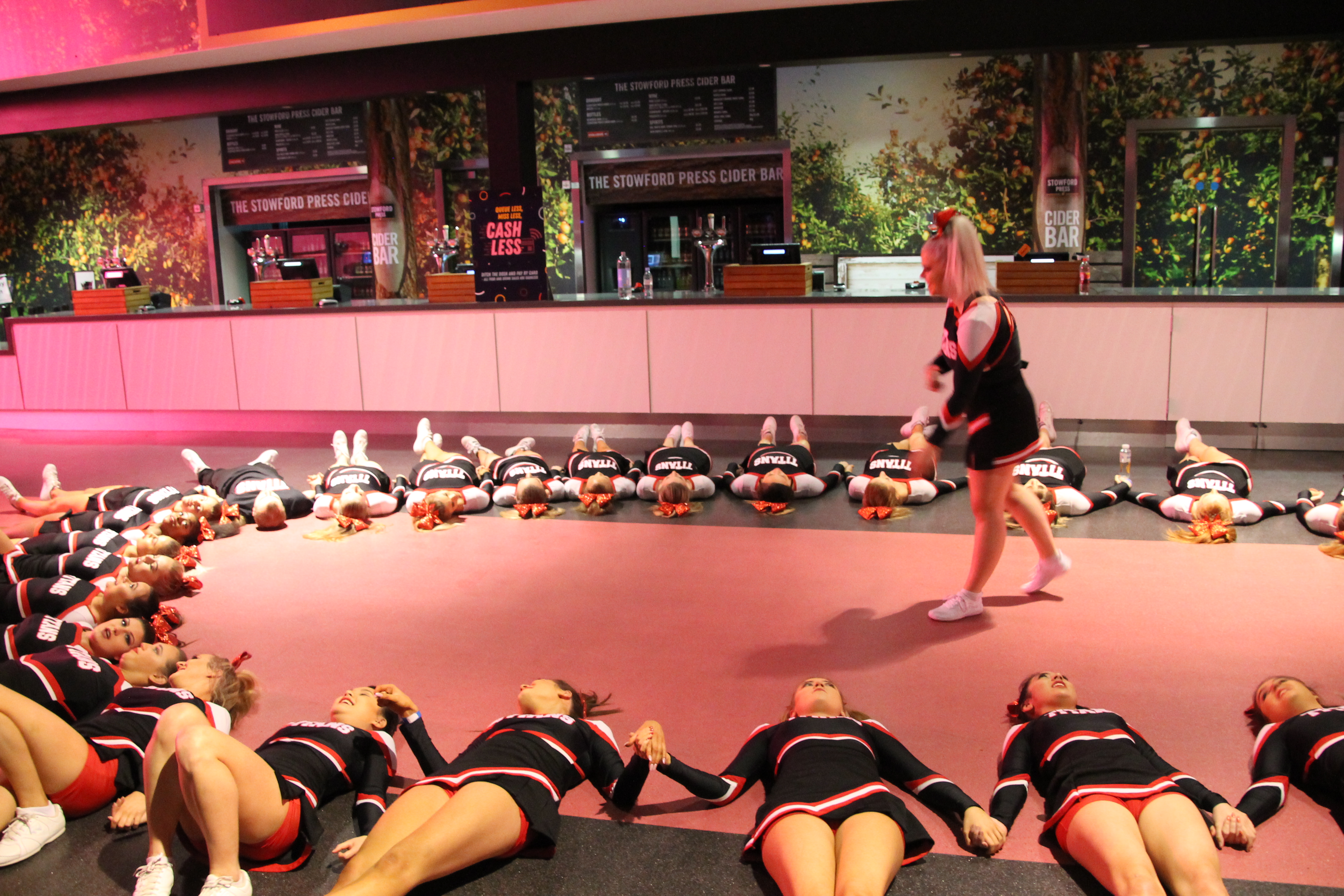
I suggest having a pre-warm-up because the official warm-up moves quickly. A pre-warm-up allows athletes to warm up their bodies and walk through the routine together.
This is also the time to explain the structure of the official warm-up to avoid wasting precious time—especially for teams experiencing their first competition. Many athletes may not know what to expect, so setting expectations is key.
CFHTT Pro Tip:
- Bring a portable speaker to keep athletes motivated during pre-warm-up and walk through the routine with them.
Warm-Up Strategy
The warm-up is your last chance to make final tweaks before competing. There should always be a structured approach because time is limited. If you’re unsure of a structure, this one works well:
- Jumps – One round to adjust to the floor.
- Pyramids – spacing and timing check.
- Tumbling – One or two reps for confidence.
- Routine Mark-Through – T-jumps and no tumbling, full-out for stunts and pyramids, focusing on timing.
CFHTT Pro Tip:
As a coach, you must lead with confidence and keep the warm-up calm and positive. Do not stress your athletes out in warm-up and expect them to perform well on the competition floor. No matter what happens in warm-up, remind your athletes that they know this routine and should trust the months of training they have done.
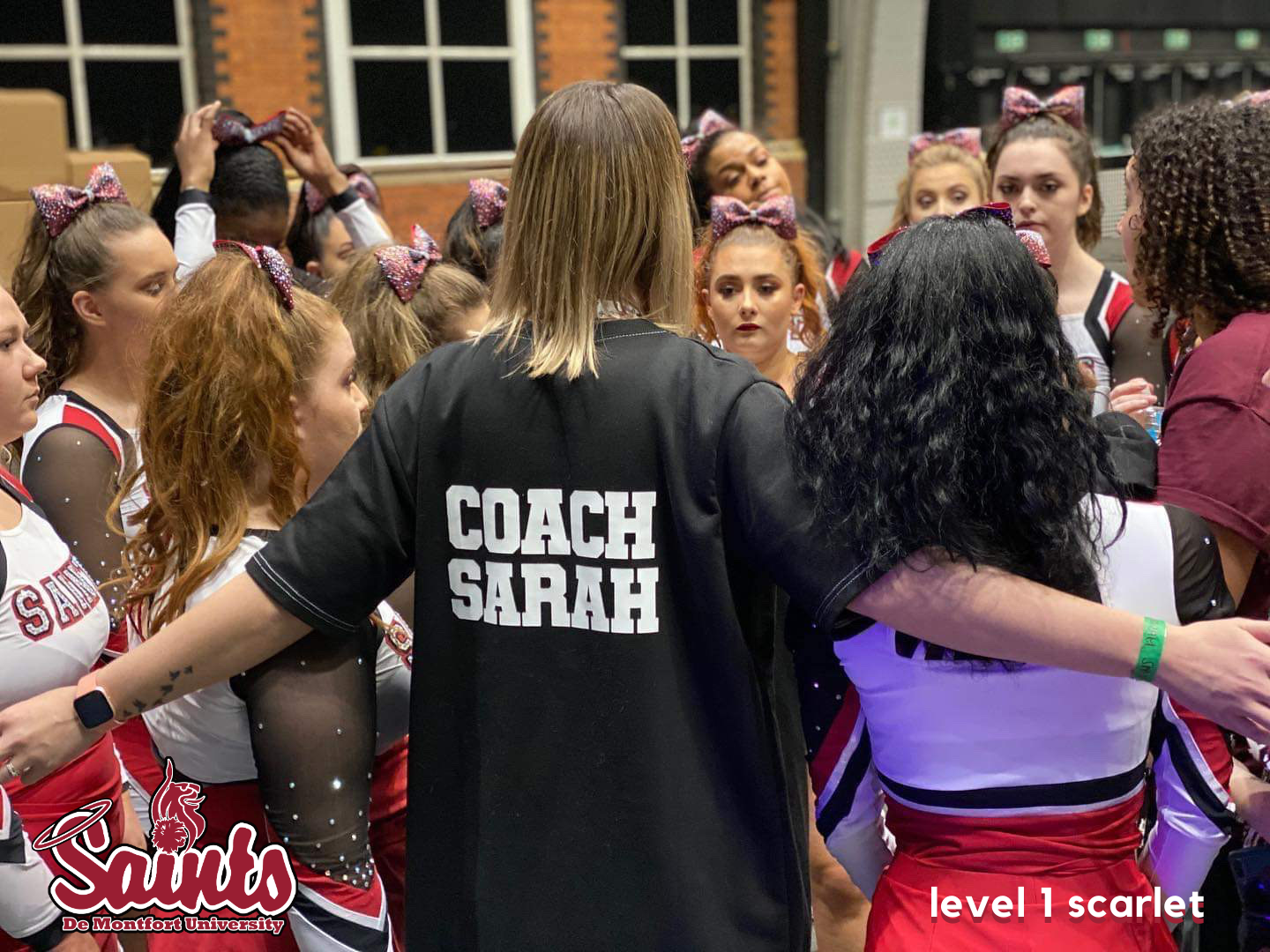
Pre-Performance Motivation
As you wait to compete, this is your last chance to talk to your athletes. Here’s what you should be doing:
- Offer words of encouragement and remind them of their hard work.
- Make sure they start in the correct positions to avoid last-minute panic.
- Reinforce that mistakes happen—what matters is finishing strong.
- Keep the energy positive with fun warm-up traditions like dancing or team chants.
After Performing: Reviewing and Scoring
Watch the Routine Like a Judge
If possible, view the performance from the judges’ perspective. Record a high-quality video from start to finish so you can analyze it later.
Reviewing Scores and Deductions

Most competitions provide scores via an app or email. Since venue Wi-Fi can be unreliable, step outside if needed to access them.
When reviewing scores:
- Check for deductions and compare them to your video.
- Look for execution issues like bent knees , poor rotation in stunts, or sync problems.
- If something seems off, politely contest deductions with supporting evidence (such as an IASF legality confirmation).
CFHTT Pro Tip:
Advocating for yourself is acceptable, but do not yell or scream—anger helps no situation.
A Few Days After the Competition
Hold a meeting with your staff, team parents, and social media team to assess what worked, what didn’t, and what could be improved for the next competition.
CFHTT Pro Tip:
Take the time to listen to your staff and team parents—they may have insightful perspectives that could benefit your team.
Wrapping Up: Learning and Improving
Now that you’ve read this guide, you have the strategies needed to have an epic first cheer competition. Share this article with your coaching friends who need help just like you did.
And if you have any other useful tips, comment below—let’s support each other!
If you found this article helpful, let’s take it a step further and work together
This guide is just the tip of the iceberg. Imagine what we could accomplish with a one-on-one session tailored specifically to your team’s needs. From attracting your ideal athletes and planning your cheer season to optimizing your social media and website presence, I can help you build a stronger, more successful program.
If you’re ready to elevate your coaching game, contact us at info@cheerfromheadtotoe.com to arrange a consultation. Let’s make your team stand out!
Want more expert coaching advice? Subscribe to our challenge and let CFHTT help you excel in this sport we all love!
Subscribe
Join happy subscribers to unlock the secrets to becoming a cheerleading expert! Don’t miss out on exclusive tips, tricks, and insider knowledge. Subscribe now and enhance your cheerleading skills today!
Discover more from The UK's number one Cheerleading Blog
Subscribe to get the latest posts sent to your email.
