In honour of
Black History Month
,we are going historical with exploring the roots of hip hop styles. We are delighted to have written this article with
Kimberley Palmer-Thompson
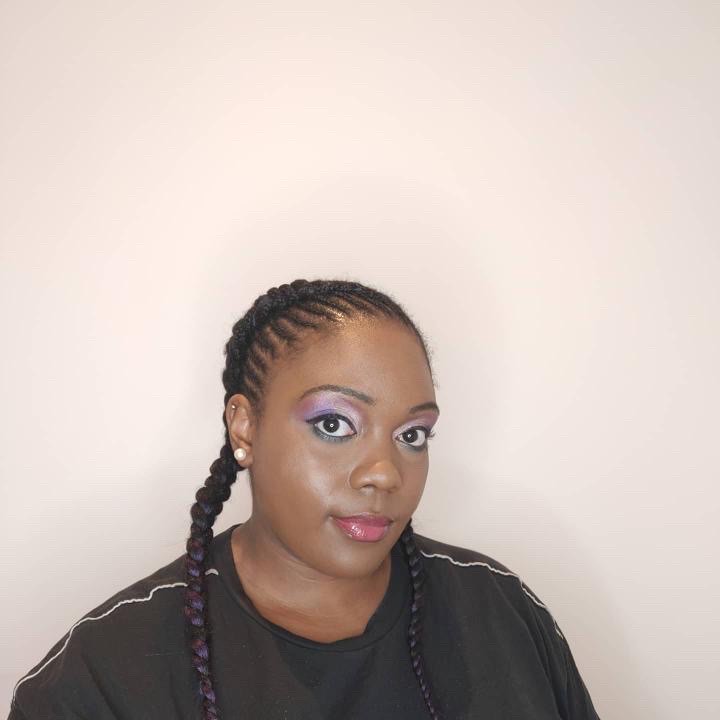
one of the Allstar Hip Hop coaches at Sparks Allstars in London, who is a professional Hip Hop teacher – her work having being recently performed at Buckingham Palace for the Queen and is an active participant in the London competitive house-ballroom scene. You can also find her front row at Studio 68, having been a featured dancer multiple times for their afrobeat and kudoro classes and she also covers street classes on occasion at Pineapple Dance Studios.
Street Dance Culture
Kimberley: To appreciate Street Dance culture (umbrella term for the various styles within that genre) is to know, understand and respect the people who went through the struggles that brought us these styles that we know and love today.
These dances are all created as forms of expression and needing another outlet other than violence. As the dances have progressed over the years due to media narrative and teaching classes the history and the message may get lost.
To understand some of the historical context you can either talk to the remaining pioneers of these various styles. Appropriation in this particular culture is happening because of lack of knowledge, understanding and respect for the pioneers.
Voguing

Kim: Within the ballroom scene it is always best to acknowledge and pay respect to the leaders of Vogue. Within the scene everyone either comes from either a house (which was named after designers e.g. lanvin, mugler, etc) or is an individual known as ‘007’.
When learning to Vogue you have to learn and understand the ‘Five’ elements along with terminology ‘, Catwalk, Hand performance, Duck walk, Dip(not death drop) & Floor’.
Before Madonna’s “Vogue”, Voguing was coined by the black and latin LGBTQ community in Harlem, having grown out of the Harlem Resistance between 1920-1935. Dance battles known as Balls which came into popularity in the 1960s birthed many styles, vogueing being among them. The point of vogueing was to demonstrate how gender was a performance, by putting on makeup, styling hair and clothing – later the style evolved into the “New Way” which incorporated more movement, such as cat walking, hence the tendency these days to describe vogueing as a “catwalk” but the original point of it being a gender exploratory style is missed. It was traditionally but not exclusively performed by performers in drag. Some sources still claim Voguing is an 1980s dance move, this is a false result of Madonna bringing it into mainstream consciousness in the 1980s.
While one person cannot be held responsible for coining vogueing, here are a couple of influential people in the Harlem Resistance.
Angelina Weld Grimké: Angelina was just one of the many pioneers of the Harlem Resistance. Born in 1880 in Massachusetts, USA, her father was a successful lawyer – the second ever African American to graduate from Harvard. He was also one of three sons of an enslaved African American woman and a white slave owner. Angelina was a talented writer, poet, journalist and teacher in her own right. Angelina outwardly identified as homosexual – it is clear in her written works. As a writer, she was one of the leading personalities of the Harlem Resistance. She died in 1958.
Richard Bruce Nugent: Richard was an openly homosexual artist born in Washington in 1906. He was primarily a painter and writer. There are records of him dance touring the country in drag, so he is presumably one of the pioneers of vogueing. He appeared in shows such as Run, Little Chillun (1933). He was certainly one of the founders of the Harlem Cultural Council in 1967, where he served as chair until 1967. He died in 1986.
Twerking
Kim: Twerking is a cultural dance of celebration which is done amongst afro-caribbean culture. It has been hypersexualised to portray a different narrative based on what it looks like however Twerking is very rich in culture as different tribes in Africa perform it differently and have a variety of meanings within said tribes/regions. Chanelle Hall a.k.a Twerkology Nation does a variety of seminars and educational workshops to really educate people on Twerking from history to the development of Twerking in modern day society.
When Miley Cyrus “twerked” on Robin Thicke during a performance in 2013, the style exploded worldwide. There is some debate over the origins of twerking, but the consensus is it is an old style, as far back as 1820. It is largely attributed to the Mapouka tribe in Côte d’Ivoire. The Oxford English Dictionary has the description “sexually suggestive dancing characterised by rapid, repeated hip thrusts and shaking of the buttocks”. In many West African communities, however, the style has been noted for years as more a celebration of happiness, often performed at weddings or even in church. The sexualisation of the style is a result of celebrities such as Cyrus and Taylor Swift exhibiting the dance without context.
Breakdancing (B Boy/B girling)

Kim’s: DJ Kool Herc is one of the first DJs to present, promote and pioneer break beats which was samples from funk music from artists’ like James Brown. One of the most famous crews for innovation/pioneering of the movement was Rock Steady Crew. There are five elements of hip hop that also need to be understood in order to understand and appreciate the movement and the culture. They are: Graffiti, MCing, Break dancing, Djing and Beatboxing. This style was created out of needing a non violent way of expressing frustration due to political and social situations at that current time.
Breakdancing was invented in NYC by the Afro-American and Latino American youth community in the 70s and 80s. It is called break as the dance was created to the rhythms of the backbeat DJs use between tracks. There is evidence of individual moves, such as the headspins performed by an “Arab” artist in the 1800s, but as a style it evolved in inner city NYC in 70s-80s. It was popularised by Michael Jacksons famous walk, the Moonwalk. Breakdancing, one step ahead of cheerleading, is hopefully about to premiere as an Olympic sport. The key element of breakdancing is the feeling of “release”. Uprock is a style of breakdancing which is essentially fighting, the style revolves around mimicking weaponary to the music. The aim was to undermine your opponent, and if successful they got “burned” (figuratively, not literally!). This style was evolved by NYC gang culture in the 1960s onwards.
DJ Kool Herc: Born Clive Campbell in 1955 in Jamaica, he later moved to New York City. He started creating breaking beats because his sister needed to raise money for her school clothes. With his beat work and “breaking” style, along with his trademark voiceovers and MC’ing, he became increasingly popular, and he is credited for designing the “blueprint” of hip hop music. In 1984 he appeared in a Hollywood movie, as himself. He didn’t release his first vinyl record until May 2019!
Waacking

Kim: Waacking like many of these other styles are created as a form of expression of being proud of who you are as well as another form of release for dealing with social and political issues during that particular era. Although the style looks fun just like others it’s about knowing and understanding the history behind it in order to appreciate it.
Waacking is a disco style that originated from LGBTQ clubs in Los Angeles in the 70s. The original dancers had many die during the AIDS epidemic of the 80s which led to a decline of knowledge about the style. It was shown on popular TV show Soul Train in the 90s. It had a revival in the last couple of years owing to social media. The key message of Waacking is that of an expression of confidence and pride in being LGBTQ.
Tyrone Proctor: Tyrone is one of the key pioneers of Waacking. After graduating high school in the 1970s, Tyrone made a beeline for LA where he joined Soul Train. He impressed and was put on the tour right away. As a group, Soul Train introduced Waacking to America. He went on to form the company The Outrageous Waack Dancers and is a co-founder of The Imperial House of Waacking. He was nominated for best choreographer at the MTV awards in 1989. He sadly died earlier this year.
Suggestions of ways you can respect the original culture when choreographing hip hop.
- Music choice. By picking an appropriate era and genre or spirit, for example if break dancing, a track by a New York artist in the 70s/80s. Don’t twerk to a song that promotes the idea of it being sexual, instead focus on the idea of celebration.
- Research the moves, reach out to the founders or living experts to improve your execution and technique if possible.
3. Outfit choice. Choosing an outfit to honour all the styles showcased in one routine in Allstar is not possible. However, if you’re doing a themed hip hop, make sure it’s appropriate.
4. Educate your team about why this style is the way it is, teach them about the founders and contribute to giving them the credit they deserve.
5. When adding moves “in the style of” think would it be out of place – for example in uprock, it’s battle style, so adding in moves to connote playing music or more pedestrian examples… Cool as it might look, it is not honouring the origins of the style.
We hope this is a small introduction to some hip hop styles and their historical relevance. We love learning so if you have more to add to the conversation feel free to message us @cheerfromheadtotoeuk. With that, we at CFHTT would like to close off Black History Month.
Written by Emma
97% of people who follow CFHTT website enjoy following our social media platforms
@Cheerfromheadto
Discover more from The UK's number one Cheerleading Blog
Subscribe to get the latest posts sent to your email.
