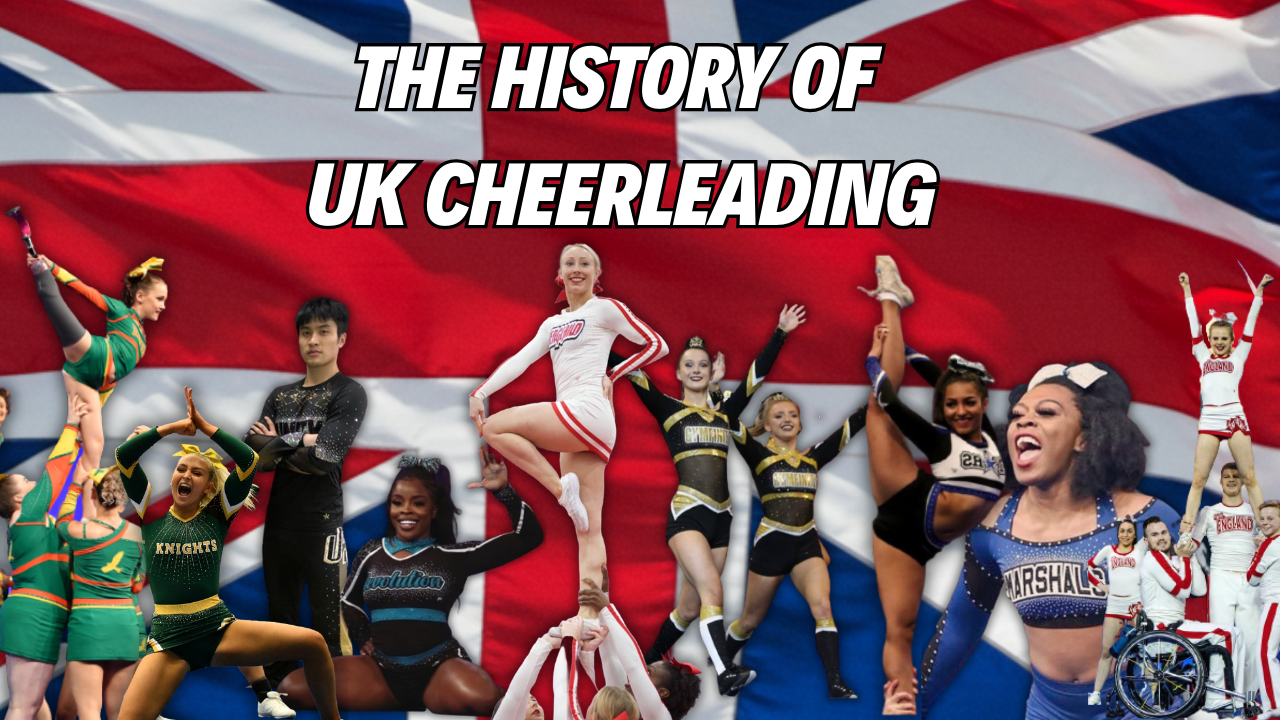
Cheerleading in the UK has come a long way from its humble beginnings on the sidelines to standing proudly on the world stage. As someone who was not only a witness but an active part of this evolution, I’ve seen and contributed to the milestones that shaped our sport. In my latest article for Cheer From Head To Toe, I share the untold stories, pioneering programmes, and game changing individuals who helped build UK cheerleading from the ground up. Whether you’re a coach, athlete, or supporter, this is more than a history lesson. It’s a celebration of how far we’ve come. It’s also a call to action for where we’re headed next.
Cheerleading in the UK has undergone a dramatic evolution over the past three decades. Once viewed as a novelty imported from the US, it is now a rapidly growing sport for women in the UK. Over 89,000 athletes participate at recreational, competitive, and elite levels. From grassroots beginnings to standing on World Championship podiums, UK cheerleading has earned its place on the global stage.
Before you continue on reading the History of UK cheerleading let me introduce myself.
📣 Cheer From Head To Toe (CFHTT) was the first platform to truly champion UK cheerleading online. Founded by a recognised expert who has led the way since 2011, CFHTT has become the trusted go-to for UK cheer coaches looking to stay ahead of the curve.
Subscribe
subscribe to CFHTT on the blog for exclusive cheer news, resources, and behind-the-scenes coverage you won’t want to miss. We’re here to make sure the UK cheer community stays seen, supported, and celebrated 💜.

The Early Days: Cheerleading Crosses the Pond
Cheerleading arrived in the UK during the 1980s and 1990s, primarily influenced by American films, television, and sports culture. At first, it was a sideline activity. It was seen at American football games and university sporting events. It was more about pom-poms and spirit than complex athleticism.
To be fair to the athletes and coaches of that era, they were eager to introduce stunting and tumbling. However, with no formal training courses available, they often had to figure things out on their own. This was a challenging feat. Despite its entertainment-focused start, this era nurtured key pioneers.
The Rise of Welsh Cheerleading:
Cheerleading in Wales has come a long way since its grassroots beginnings in 1990. At just 17, Jo Redman formed Jo’s Heatwave, one of the nation’s first cheerleading teams. It started as a performance at a Cardiff basketball game. This ignited a movement. It has grown into a thriving national sport. Today, Wales boasts a strong cheerleading community that blends passion, inclusivity, and elite performance.
A key milestone in this journey was the establishment of SportCheer Wales (SCW), the national governing body for Welsh cheerleading. SCW plays a pivotal role in developing the sport from grassroots to international competition, offering support, safeguarding, and structured progression pathways.
In 2025, SCW achieved full recognition as a sporting body. This was an important step that validates the hard work of its athletes, coaches, and volunteers. SCW also oversees Team Wales, which competes annually at the prestigious ICU World Cheerleading Championships in Florida.
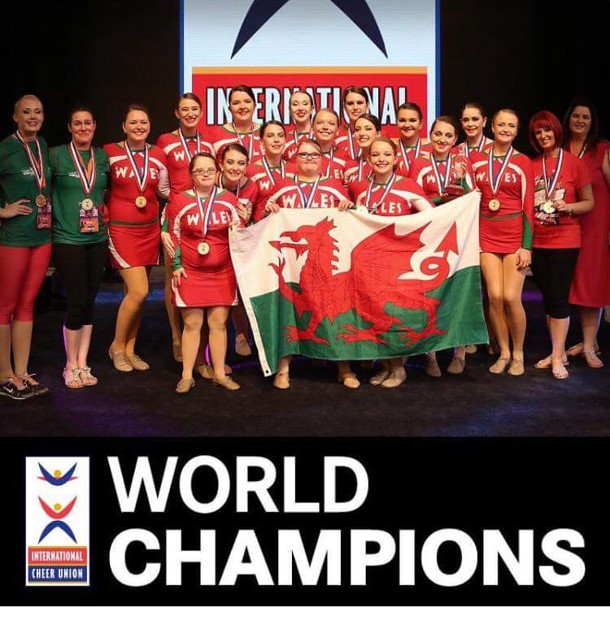
Team Wales has become a respected presence at the ICU World Championships, earning multiple podium finishes. Notably, the nation has dominated Adaptive Abilities divisions. They claimed golds in 2017, 2022, 2024, and 2025. They also secured several silver and bronze medals. This reflects not only the technical excellence of Welsh teams but also their commitment to inclusivity.
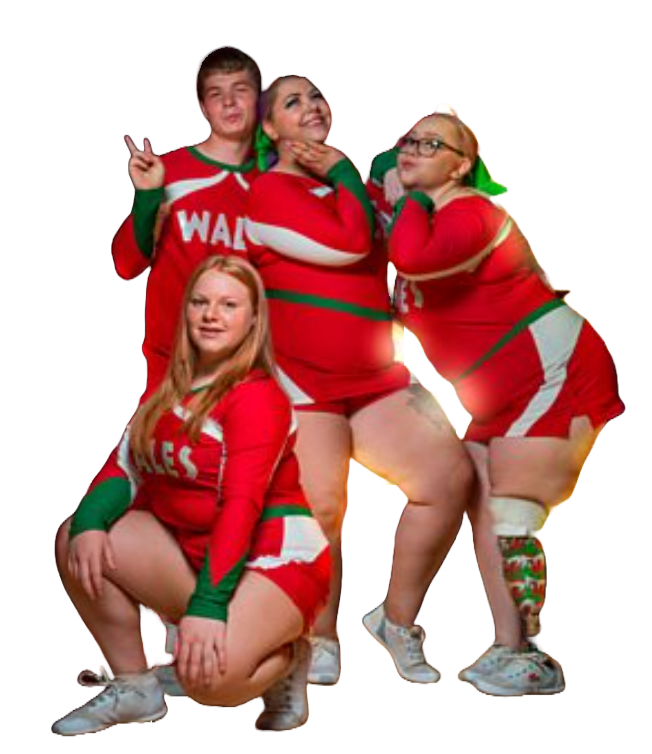
In 2021 and 2022, Little Bird Films captured this spirit in a touching documentary. The film followed Wales’ first Adaptive Abilities team on their road to the ICU World Championships.
Today, Welsh cheerleading stands as a beacon of growth and opportunity. Wales demonstrates that even a small nation can leave a big mark on the cheerleading world in various ways. These include pioneering leadership, structured federation support, and global recognition. With passion and perseverance, Welsh cheer continues to rise. The deep-rooted sense of community supports this rise both on and off the mat.
Notable mention
Wales’ impact on the world stage has been nothing short of impressive. Leading programmes such as RSD Dance & Cheer and Gymfinity Sports Academy have developed athletes. These athletes proudly represent the nation in both cheer and dance. These athletes compete as part of Team Wales at the ICU World Championships. They also represent Wales-based teams at The Cheerleading Worlds. In 2024, Gymfinity’s senior all-girl Level 6 team, Ladies of the Crown, made history. They became the first-ever Welsh team to earn a globe at The Cheerleading Worlds. Meanwhile, RSD has established itself as a consistent powerhouse, particularly in the dance divisions, dominating in pom, jazz, and lyrical. Their athletes have been instrumental in Wales’ growing international presence. They continue to set the standard for excellence both at home and on the world stage.
How Cheerleading thrived in Scotland
Many Scottish cheer coaches began their journey in the 1990s after cheering professionally for the Scottish Claymores in NFL Europe. These pioneers were encouraged to bring cheerleading to their communities. They established local clubs. Young athletes also had the opportunity to perform at games.

Steve Walls was a former amateur American football player in Dundee. His wife, Jo, founded a cheerleading club to support the football team. They both played a pivotal role in the sport’s growth. After attending a few cheer competitions in England, Steve was inspired to bring that energy to Scotland. This led to the creation of Scotcheer. It debuted at the DISC Centre in Dundee in 1999. Since then, cheer and dance have flourished across Scotland, growing in strength and popularity year after year.
Claire McKay, a former NFL Europe cheerleader for the Scottish Claymores, founded Gold Star Cheer and Dance in 1999. Gold Star’s trailblazing team, Gold Star Galaxy, laid the foundation for the All Girl division in UK cheerleading. Their early innovation and leadership in the division set the stage. It helped shape what is now a thriving and highly competitive space for All Girl teams across the country.
British Cheer : Growth and Global Influence
In the late 1990s, cheerleading in the UK was still in its early stages. It was often misunderstood and rarely televised. It lacked the infrastructure of more established sports. Yet, even then, it was quietly gaining momentum. Cheerleading uniquely attracted girls and young women. It retained them at a critical age. During this time, many were beginning to drop out of sports altogether.
Traditional sports often struggled to keep girls and young women engaged through their teens. Cheerleading offered something different. It provided a fusion of athleticism, creativity, community, and empowerment. For many athletes, it became more than a sport it became a source of confidence, belonging, and mental wellbeing.
One of the foundational programmes that helped ignite that early spark was Surrey Starlets. It is co-owned by Kim Cope and Emma Haggis. The programme began in 1998 as a local pee-wee team. It quickly made an impression by placing 2nd out of 14 teams at their very first competition. This strong debut hinted at what was to come.
Over the next two decades, Surrey Starlets evolved into one of the UK’s most respected cheer programmes. Their Level 5 team, Amethyst played a crucial role in developing the All Girl Level 5 division. This was especially significant during a time when this category was just beginning to take shape. Known for their cutting-edge pyramids and dynamic choreography, Amethyst helped push the boundaries of what UK teams could achieve.
The Surrey Starlets have competed at the World Cheerleading Championships. They have also performed at major events like the London 2012 Olympics, T4 on the Beach, and Reading Festival. They have consistently showcased what’s possible when passion and performance meet. Their legacy continues to inspire a generation of athletes. It stands as a powerful example of how cheerleading helped shape the sporting landscape for young women across the UK.
British cheerleading soon began to forge its own identity. Athletes became captivated by the physical demands of the sport. These include jumps, stunts, and tumbling. Teams gradually transitioned from sideline performances to structured, competitive routines.
The 2000s: Building the Framework
The early 2000s ushered in a foundational shift. Cheerleading programs began appearing in schools, universities, and independent clubs. Coaches and athletes often relied on US-based training materials to improve technique and create more cohesive programs.
University cheer programs were vital to this growth. Before cheerleading flourished in private clubs, university teams championed the sport. They often faced resistance from sports unions. These unions didn’t understand the need for training mats or recognise their activities as sport.
Behind-the-scenes CFHTT insight: The powerhouse program Unity Allstars was co-founded by Tori Ruben and Amanda Davidson, both of whom started cheerleading at university. Similarly, EMCA East Midlands Cheerleading Academy was built by university cheer alumni Anna Mead and Helena Zarzycki. Both programs have gone on to produce medal-winning teams at the Cheerleading Worlds.
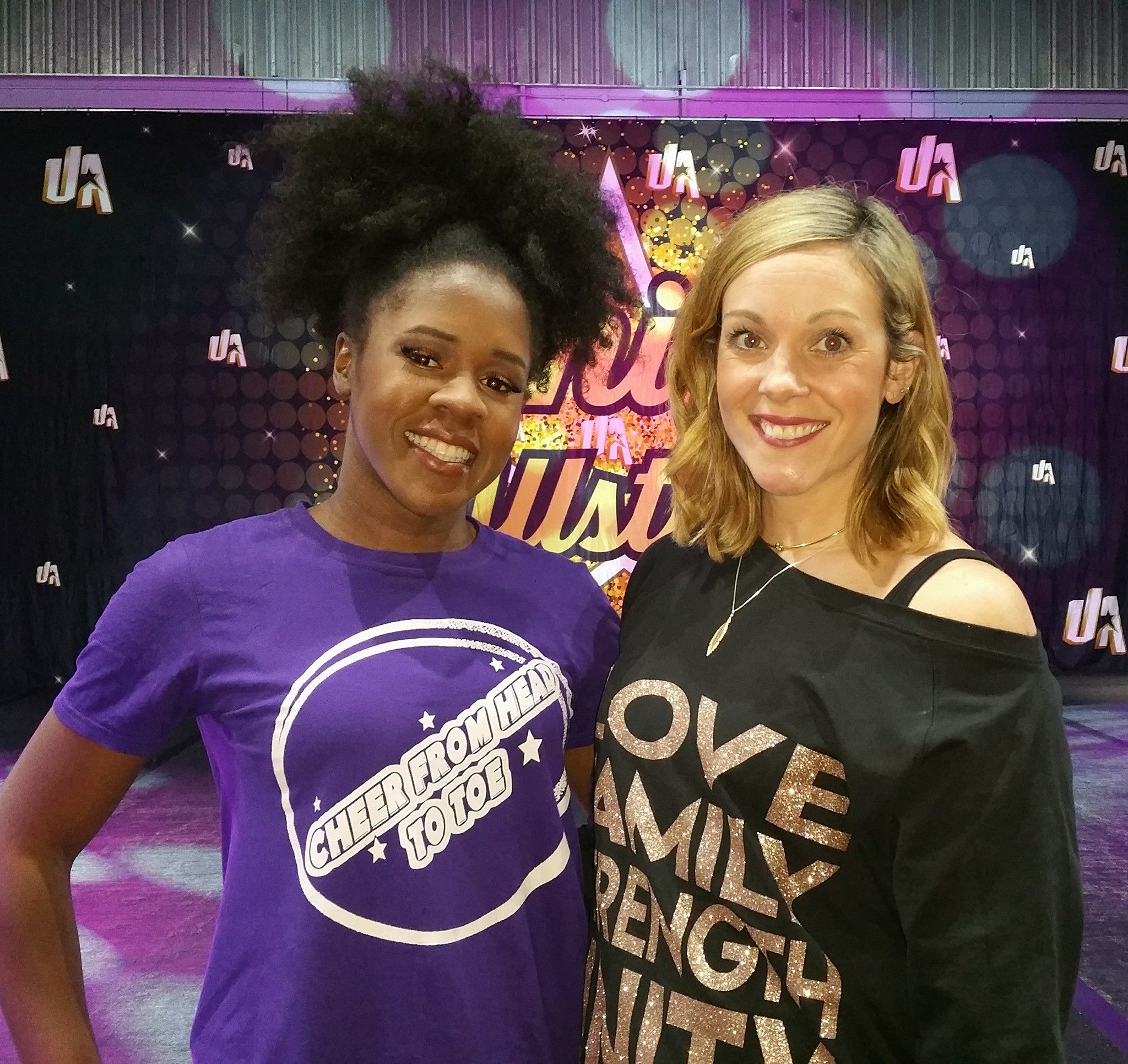
CFHTT reviewing Unity Allstar Showcase
By the mid-2000s, UK routines aligned more closely with international scoring standards evaluating teams on difficulty, execution, and creativity. The cheer community welcomed athletes from dance, gymnastics, and other non-traditional sport backgrounds, expanding the sport’s appeal.
Pioneering teams of the 2000s:
I have spent over a decade documenting the UK cheerleading scene through Cheer From Head To Toe. It’s important for me to highlight not just the milestones. I also want to recognize the moments and athletes who personally inspired this journey. Two standout programmes from the early 2000s truly changed everything I thought possible about UK cheer — and left an indelible mark on the sport’s history.
Leeds Celtics & The Power of Possibility
I was first exposed to high-level Allstar cheer by watching Leeds Celtics. The unforgettable partner stunt duo Rachel and Tim caught my attention. What they delivered on the mat was more than skill it was art. They performed with such control and fluidity that it honestly didn’t feel real. At the time, their stunt work mirrored the elite execution I’d only seen from powerhouse U.S. university teams like Kentucky.
It was jaw-dropping.
The entire audience held its breath. For me, it was the moment the bar was raised. I knew UK cheer had entered a new era.
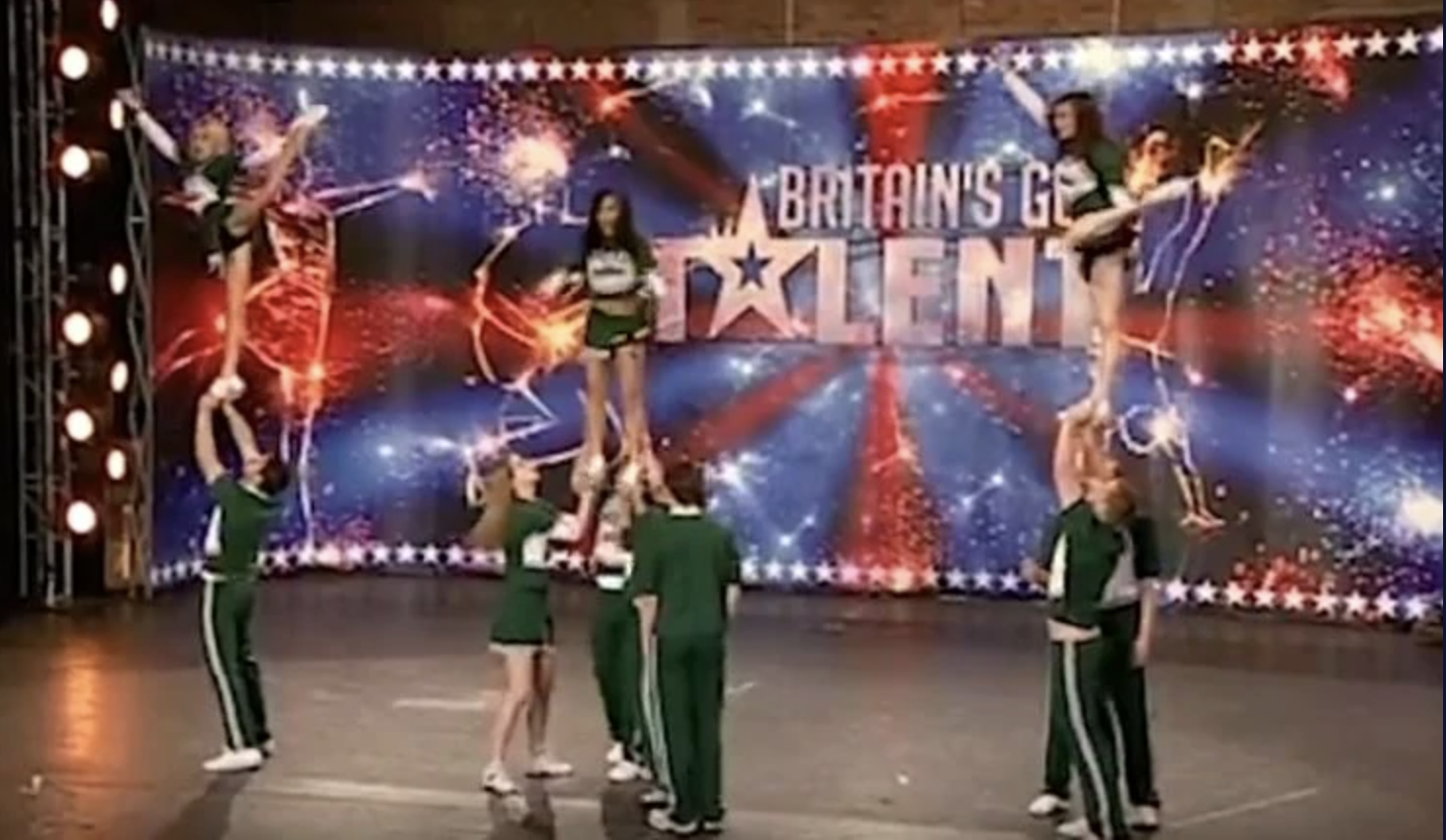
Rachel and Tim weren’t just phenomenal athletes. They went on to lead the Leeds Celtics programme. This established them as a dominant presence on the university cheer circuit. Later, they co-founded Aviator Aces. It was a programme that pushed boundaries at the highest levels. This was especially true in Level 7, which was previously Level 6. Their routines were showstoppers. The arena would fall silent in anticipation of what impossible-looking stunt they would land next — and they never disappointed.
It’s also important to remember that their team was part of a historic achievement. They were among the first all-girl teams to represent Team England at the ICU World Championships. That moment wasn’t just about athletic excellence it was about progress, pride, and putting UK cheerleading on the international map.
Ascension Eagles Legacy: A Blueprint for Representation and Greatness
Around the same time, another team redefined what UK cheer could and should look like and who it could be for. That team was Ascension Eagles Legacy.
To this day, they remain one of the most influential programmes I’ve ever seen. Their stunts were elite, their tumbling explosive, and their choreography bold and creative. They were different. They were the UK’s answer to Top Gun. They had a world-class edge. Their vision was far ahead of its time.
But what struck me the most was something deeper: they were the first team I ever saw that looked like me.
Seeing Black flyers being launched into the air, performing stunts that could rival Cirque du Soleil, was nothing short of revolutionary. Representation matters. And in that moment, it changed everything for me.
Ascension Eagles Legacy weren’t just raising the standard — they were paving the way for diversity in elite UK cheerleading. They were living proof that excellence in this sport wasn’t limited . And the fact that they did it with such flair, power, and unity was nothing short of iconic.
This team was one of the core reasons I founded Cheer From Head To Toe. I couldn’t believe more people weren’t talking about them. I wanted to create a platform that celebrated UK cheerleaders, gave them the visibility they deserved, and archived their achievements for generations to come.
Honourable Mentions
Rising Stars, Ascension Eagles, Unity Allstars, RSD Allstars, Surrey Starlets, Aviator Aces, and DC49 were trailblazing programmes. They showcased the depth of UK cheerleading talent. Their innovation and athleticism were remarkable. Their impact directly inspired the launch of Cheer From Head To Toe (CFHTT). It is the UK’s first platform dedicated to elevating British cheerleading on the global stage.
2010s: Recognition and Respect
The 2010s marked cheerleading’s shift from niche activity to respected sport.
Team England Cheer was founded in 2014. Visionaries Tori Rubin and Angela Green recognised the need for a unified national team. They wanted to represent English cheerleading on the global stage. Before 2014, individual club teams like Aviator Aces and Ascension Eagles represented England at the ICU World Cheerleading Championships. Tori and Angela foresaw that a united national team would raise the standard of English cheer. They understood it would also bring the community together. That vision became reality with the creation of Team England Cheer. This team is made up of athletes from across the country. They were selected to showcase the very best of English cheerleading.
From the beginning, Cheer From Head To Toe (CFHTT) played a key role in rallying national support. They did this through interviews, articles, and regular updates. This made sure the UK cheer community stayed informed and inspired. Their early coverage sparked nationwide pride. It gave Team England the encouragement to know the country was behind them 1000%.
A single Coed Premier team began this journey. It has now grown into one of the most respected programs. It is one of the most decorated national programmes at the ICU World Championships. Team England now fields multiple divisions from Youth to Premier Elite consistently earning podium placements and global admiration. The journey from 2014 to now is a testament to the power of unity, vision, and relentless dedication.
This decade saw:
- ✅The rise of full-time coaching roles
- ✅Development of specialised training facilities aka cheer gyms
- ✅ Expansion of governing bodies, such as SportCheer England
- ✅ The birth of Dynasty of Team England Cheer
These advancements professionalised the sport, created safer training environments, and gave athletes a pathway to elite competition.
Inclusivity and Accessibility
One of the biggest shifts during this time was accessibility. As noted in my article “Is There Cheerleading in the UK?”, more schools and grassroots organisations began to offer cheerleading regardless of background or income. Barriers were lowered, and participation widened.
In 2010, the first-ever wheelchair partner stunt was performed on UK soil. In the following years, 2011 and 2012, Rick Rodgers performed on the ICU Worlds stage in front of thousands. Then, in 2014, he was invited back by the ICU to help create what became known as the ParaCheer division.
This era also saw CFHTT thrive. We amplified UK cheerleading stories across social media, giving teams a global platform and showcasing the talent within our community. We worked with a wide range of teams. This included Team England Cheer, Jazz, Pom, ParaCheer, Team Scotland, Wales, and Ireland. We helped to spotlight the full spectrum of UK cheerleading on the international stage. CFHTT was a true trailblazer. It was the first to consistently spotlight UK cheerleading across platforms. CFHTT championed our athletes, coaches, and their stories when few others were watching.
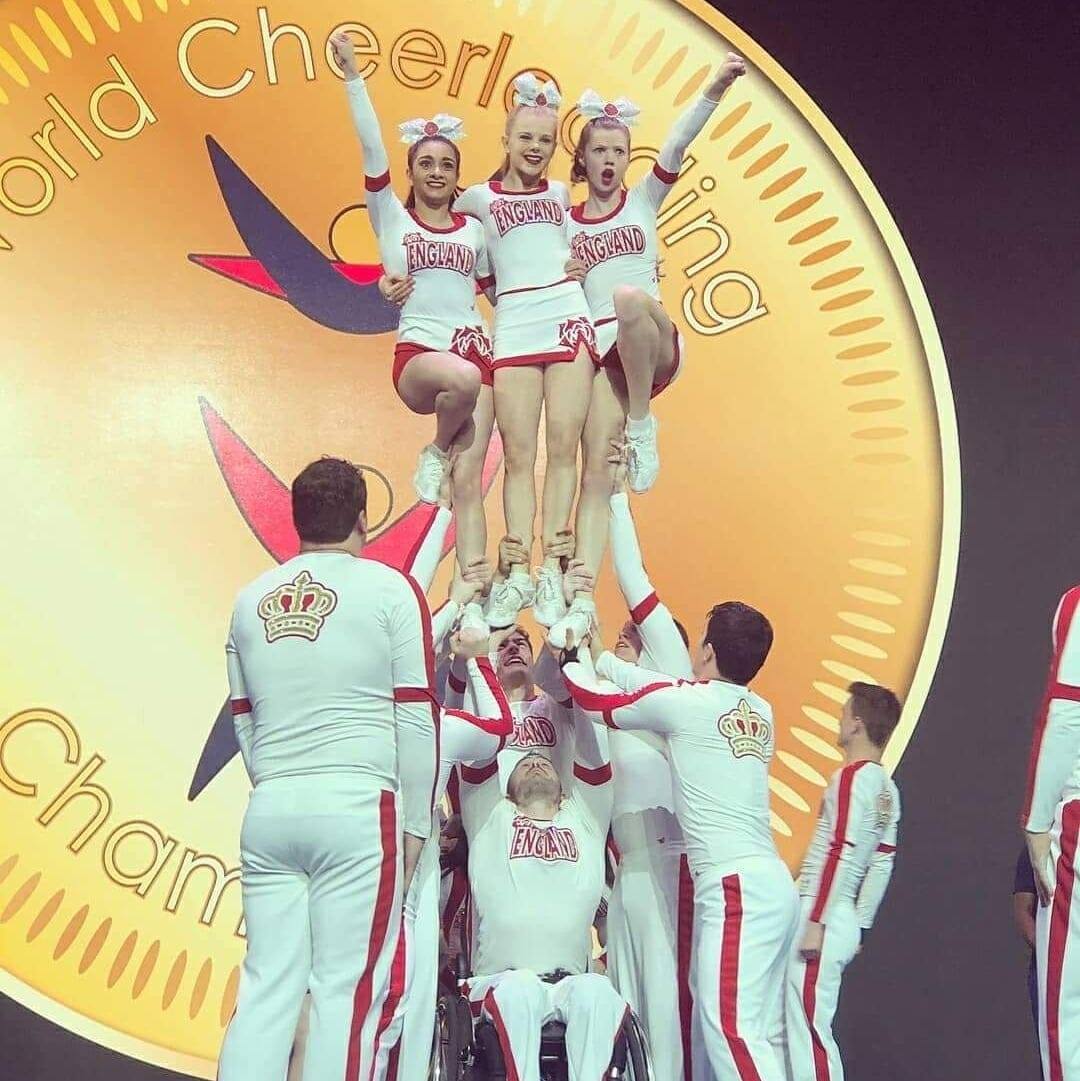
In 2017, the first competitive unified Team England ParaCheer now known as Team England Adaptive Abilities was formed. This team modeled true inclusivity. Disabled and non-disabled athletes collaborated. They created routines that were as complex, technically demanding, and visually captivating as any other elite team. During this pivotal time, 2018 CFHTT produced a documentary chronicling their inspiring journey to the ICU World Championships. The documentary was a major success. It played a significant role in raising the profile of UK cheerleading on the international stage.
In 2019, Coventry Dynamite Ammo Coed and Rising Stars Ellipse All-Girl carved their names in history. They became the first UK teams to medal at The Cheerleading Worlds. They earned a bronze medal. Their achievement sent a clear message to the global cheer community. The UK was ready to compete. It was prepared to dominate on the world stage.
2020 and Beyond: A Sport Officially Recognised
In 2021, cheerleading achieved a milestone: it was officially recognised as a sport by the International Olympic Committee (IOC). This sparked renewed enthusiasm across the UK and bolstered dreams of one day seeing cheerleading in the Olympic Games.
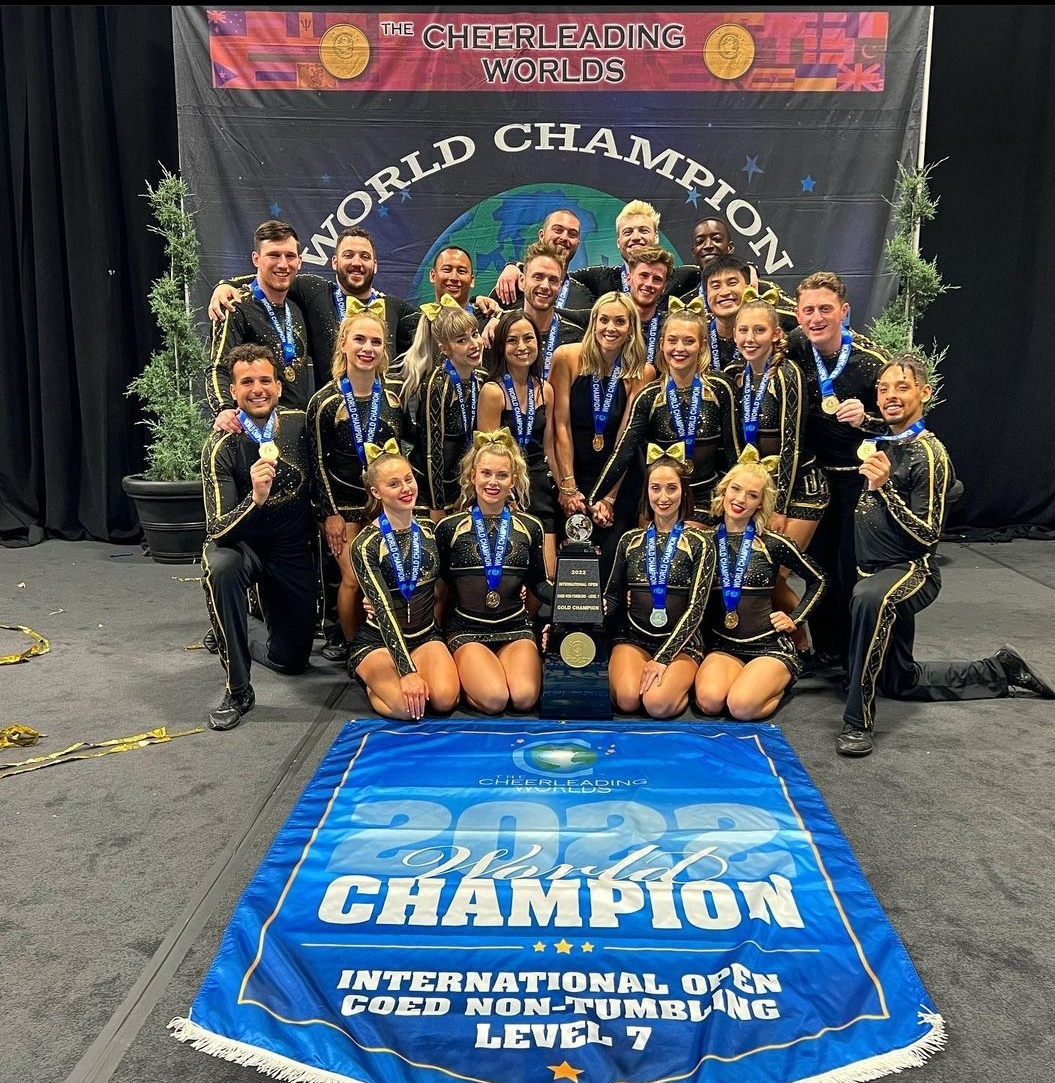
In 2022, Unity Allstars Black made history. They became the first UK team to globe at the IASF Cheerleading Worlds. They have dominated their division ever since.
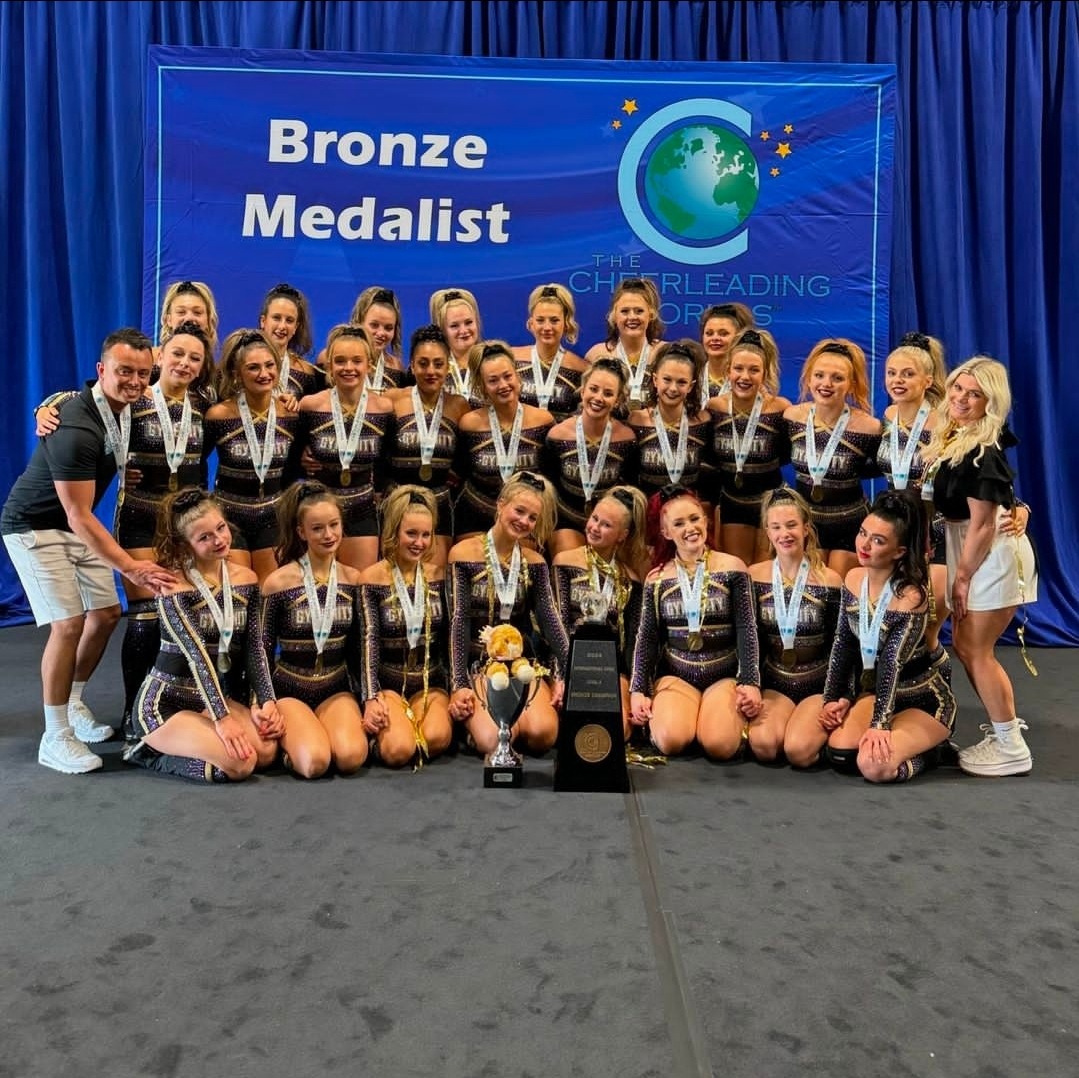
Furthermore, in 2024, Gymfinity’s Ladies of the Crown became the first Welsh team to globe at the IASF. They proudly earned a bronze medal.
Back in the UK, SportCheer England has continued to lead athlete development, improve coaching standards, and implement safeguarding practices. The cheer landscape now includes:
- ✅ Competitive all-star programs
- ✅ Recreational and school-based teams
- ✅ University and adaptive cheer teams
This diversity highlights the sport’s inclusivity and resilience.
In 2025, cheerleading was officially recognised as a sport in England by Sport England—a monumental step for legitimacy and funding.
“Sport England is committed to making sport and physical activity a normal part of life for everyone, regardless of background, gender, income, or location. Recognising the inequalities in access, they aim to break down barriers and ensure everyone can benefit from being active.” sport England
The Future Is Bright
The UK cheerleading community is experiencing growing infrastructure, passionate coaches, and a vibrant athlete community. CFHTT is leading from the front as the community’s go-to platform. The future of UK cheerleading is brighter than ever. We have moved from sidelines to centre stage. This change is thanks to a community that believes in the athleticism, creativity, and empowerment UK cheerleading brings.
To all coaches, athletes, and programme leaders reading this—your journey is vital. Your commitment and innovation are what will continue to drive this sport forward. CFHTT is here to support, celebrate, and amplify your impact every step of the way.
The UK is no longer borrowing from American playbooks. We’re authoring our own, grounded in British grit, community spirit, and unparalleled talent. If you’re a UK coach, athlete, or supporter, CFHTT invites you to connect. Share your cheer journey with us. Help us build the next chapter of our sport together. writing our own legacy.
And the best part? We’re just getting started.
CFHTT, write every article with the aim of supporting and uplifting the UK cheer community. If you find it helpful, please share it with other coaches. Together, we can raise the standard. We can also share knowledge and make our sport even stronger. 💜

Subscribe now and enhance your cheerleading skills today!
Discover more from The UK's number one Cheerleading Blog
Subscribe to get the latest posts sent to your email.
