Is It Too Late to Start Cheerleading?
Here’s What You Need to Know!
Are you desperate to become a cheerleader but confused if it’s too late to start this physically and mentally demanding sport? Whether you’re a parent considering cheer for your child, a teen eager to join a team, or an adult wondering if your cheer dreams are still within reach, this article guides you.
We break down the best ages to start, the different pathways available, and what it takes to succeed at any stage. Discover how age is just a number in cheerleading and find out how you can jump into this thrilling sport, no matter when you start!
Why Cheerleading?
Cheerleading is a dynamic, team-focused sport that combines dance, gymnastics, stunts, jumps, and a whole lot of personality. It’s more than just cheers and pom-poms; it’s a test of athleticism, teamwork, and determination.
“In England, cheerleading is one of the fastest-growing sports in the country, with over 89,000 athletes participating at recreational, competitive and elite levels.” Sportcheer England
Before we dive deeper into when and how you can start cheerleading, let’s introduce you to Cheer From Head to Toe (CFHTT), a platform dedicated to championing the UK cheer community.
CFHTT was created to address the lack of representation for UK cheer community online. Over the years, it has evolved into a comprehensive resource aimed at empowering and educating athletes, cheer dancers, coaches, cheer parents, and anyone keen to excel in this sport. If you’re interested in learning more about UK cheerleading, subscribe to our newsletter!
Subscribe today
Join happy subscribers to unlock the secrets to becoming a cheerleading expert! Don’t miss out on exclusive tips, tricks, and insider knowledge. Subscribe now and enhance your cheerleading skills today!

SportCheer UK (SCUK) governs cheerleading in the United Kingdom. SCUK provides an age grid for our sport, so they decide at what age you can start cheerleading.
Is There an Ideal Age to Start Cheerleading?
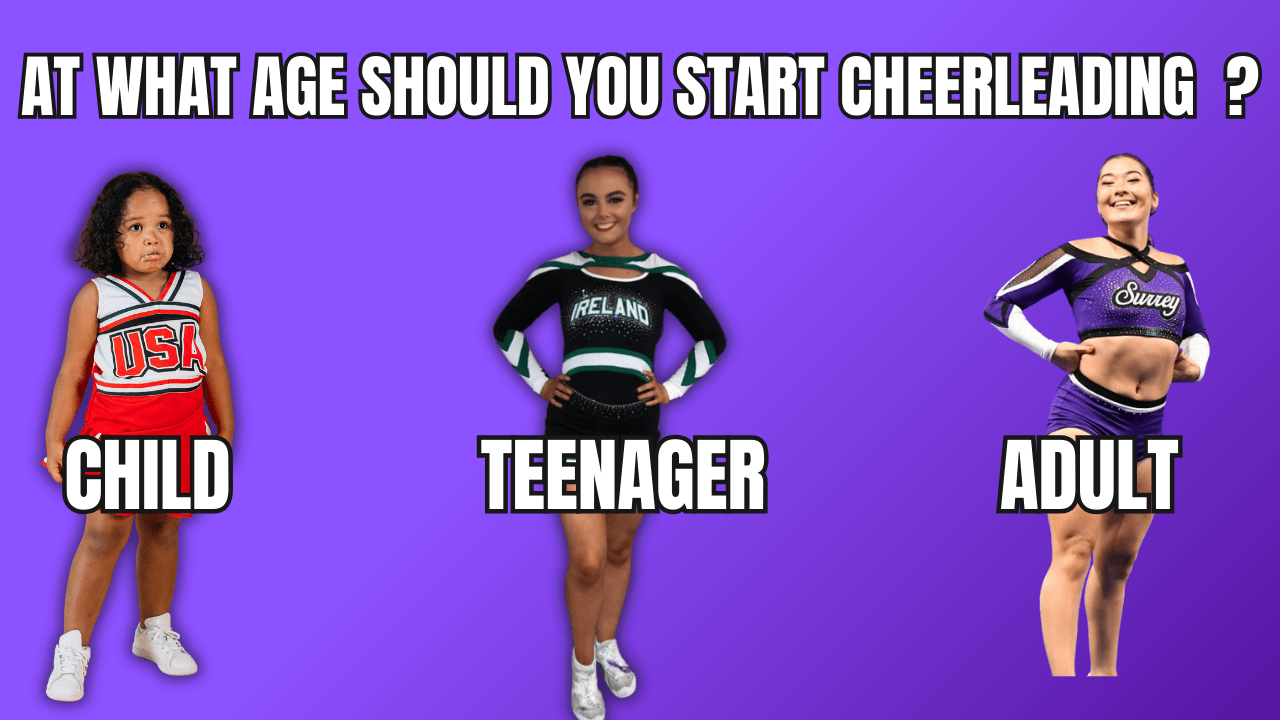
Now, let’s get to the big question: what’s the best age to start cheerleading? The truth is, there’s no one-size-fits-all answer.
Technically, you can start cheerleading at three and there is no upper age cut-off point.
Below are the age ranges most athletes are introduced to the sport
At age 11 through school teams or local Allstar Teams.
At age 18 through university sports teams.
At age 25+ through master teams.
CFHTT Advice for Adults
If you’re a young adult who doesn’t want to be in a team with young children, but you’re more advanced than the master team, then an open senior team might be for you. Athletes in these teams are typically working professionals balancing life and cheerleading, ranging from their 20s to 30s. These teams are especially popular in London and other big cities.
Here is video of Open Senior team
CFHTT Tip
Balancing Cheer and Life can be challenging but organisation and time management are the solution
- Get your competition and training schedule as soon as possible and merge that with your work schedule.
- Communicate with your work and your cheer coaches about a realistic schedule which will allow you to work and cheer to a suitable standard.
- Be prepared to make sacrifices to have a successful Cheer life balance.
Master Team
Many gyms and programs offer beginner classes specifically designed for adults who are new to the sport or who may have missed out on cheerleading opportunities earlier in life.
Adult Beginner Classes aka Master team: These are gaining in popularity with
many gyms offering cheerleading classes designed specifically for adults who are new to the sport. These classes focus on foundational skills like stunting, tumbling, and dance, allowing adults to develop their skills gradually and at their own pace. Whether you’re in your 20s, 30s, or beyond, there’s a starting point for everyone.
Here is video of Master Team
At what age should a child start Cheerleading?
While it’s possible to start as young as three, CFHTT recommends that 8-10 years old is an ideal time. At this age, children have a better understanding of what they enjoy and are more likely to be genuinely passionate about the sport. They’re also mature enough to grasp the commitment required and will be motivated to push themselves and support their teammates.
CFHTT tips
Questions to ask yourself before putting a young athlete into a cheerleading team
- Their ability to stay focused during practice sessions
- Their capability to handle failure or disappointment constructively
- Their genuine interest in committing to a full cheer season
- Their comfort being away from parents during practices and competitions
- Their ability to balance the demands of competitive cheer and school
Important Factors to Consider Before Starting Cheerleading.
Commitment Level
Cheerleading requires consistent training, especially if you’re aiming for competitive levels. The average All-Star cheerleader trains at least once a week, and this can ramp up to 2-3 times weekly during competition season. Teams typically compete in 3-4 events each season, often requiring travel and accommodation across the country at additional expenses.
Financial Commitment
There’s no denying it-cheerleading can be expensive.
Costs include:
Membership Fees: These vary depending on your gym and location but can range from £20- £40 per month.
Uniforms and apparel: Expect to spend anywhere from £40-£190 for uniforms, plus additional costs for compulsory training gear.
Travel and Accommodation: With competitions held across the UK, travel and hotel stays are additional expenses that can add up.
CFHTT Tip
Before committing, it’s wise to ask your cheer gym for a full breakdown of costs and payment schedules (e.g., upfront vs. spread out over the season).
Safety and Team Selection
CFHTT Tip:
Before joining a program, have a conversation with the coaching staff or director. While websites and social media can give you a good overview, nothing beats direct communication to gauge if the gym’s culture and coaching style align with your needs.
CFHTT recommends researching and selecting a trustworthy team with experienced and qualified coaches who prioritize proper training techniques, safeguarding policies, safety measures, and age-appropriate activities for athletes.
Cheer From Head To Toe encourages anyone looking to join a new team to investigate if your chosen team has these safety measures:
- Social Media Policy
- Safeguarding Policy
- Reporting an Issue Policy
- Equity Policy Statement
- Code of Conduct Policy
- Anti-Bullying and Harassment Policy
Final Thoughts
The earlier you begin, the more time you have to refine your skills and reach your full potential. Whether you start at age 3 or later in school, university, or even as an adult, there are pathways in cheerleading for everyone. It’s important to choose the right team that aligns with your goals, whether recreational or competitive and prioritise safety with qualified coaches and appropriate training. Remember, it’s never too late to start-what matters most is your commitment, passion, and willingness to learn. So, take that leap and let your cheer journey begin!
Want More Tips? Sign Up for Our Mailing List!

Looking to become a better cheerleader join our newsletter?
Join happy subscribers to unlock the secrets to becoming a cheerleading expert! Don’t miss out on exclusive tips, tricks, and insider knowledge. Subscribe now and enhance your cheerleading skills today!
Here are some video of other Cheer team at different ranges
U16 level 1 must be born between 2008-2013 age 12-16 : No Males allowed on team
U18 COED level 6 must be born between 2006-2011
Senior Team : 12+ with at least 1 athlete15 years or older
Tiny Novice age 3-6
Discover more from The UK's number one Cheerleading Blog
Subscribe to get the latest posts sent to your email.

One thought on “What age should you start cheerleading”