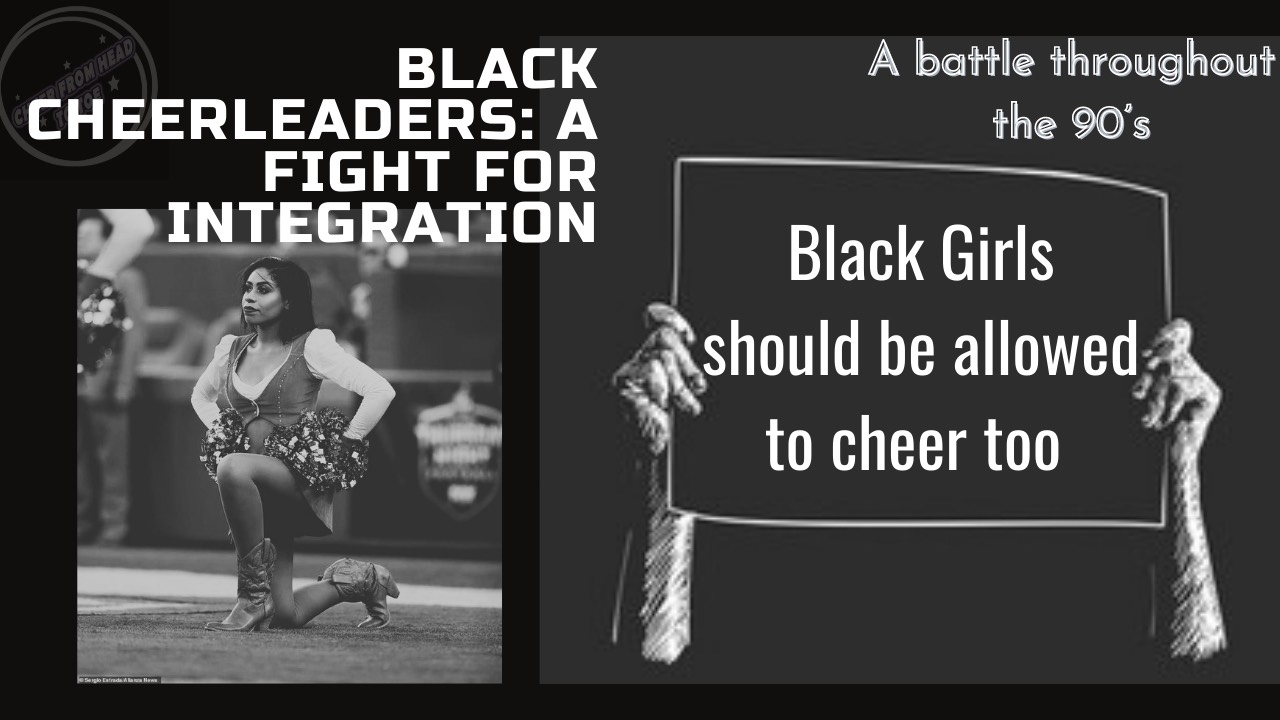
Protesting is used as a way to publicly make opinions heard and demonstrate the importance of a belief in an attempt to influence and or change the opinions of other members of the public or people in a higher power.
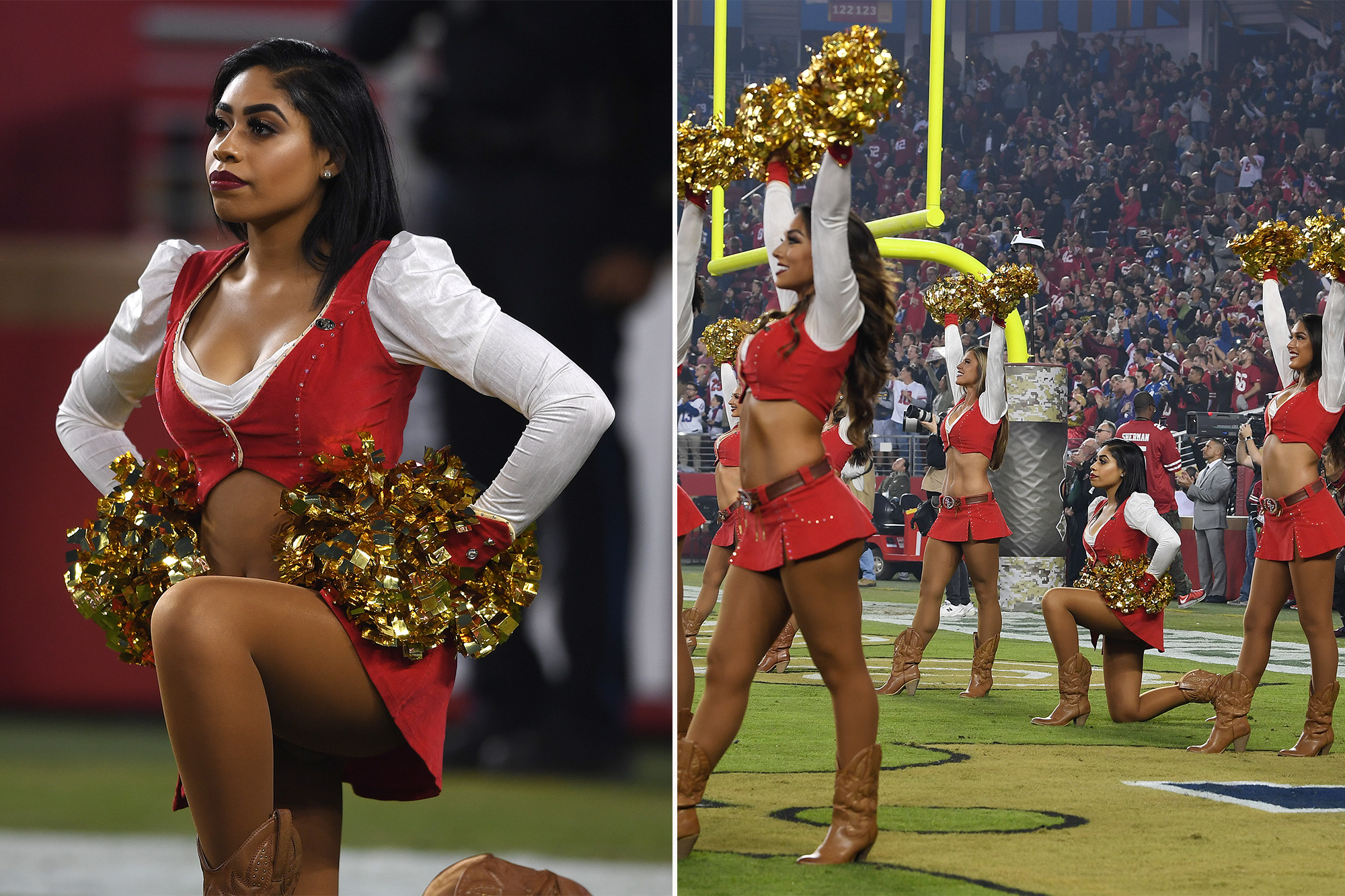
Black cheerleaders have had a long history of protest in order to make people listen and understand the issues they have faced and still face to this day. Kayla Morris, an NFL cheerleader for the San Francisco 49ers became the first NFL cheerleader to take a knee during the National Anthem back in November 2018.
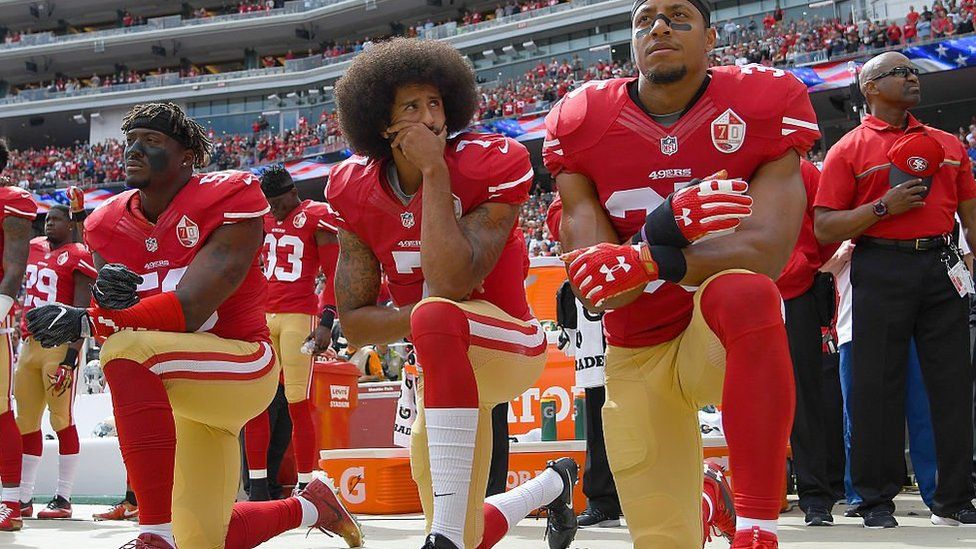
This came after former quarterback for the 49ers and American Civil Rights activist, Colin Kaepernick kneeled in a peaceful protest of police brutality during the anthem in 2016. Kaepernick told the NFL media team in an interview after the game “I am not going to stand up to show pride in a flag for a country that oppresses Black people and people of colour,”. To read more about this click here.
Although Kayla may have been the first cheerleader to pluck up the courage to protest on the NFL stage, college and high school cheerleaders across America had been kneeling for solidarity in the years leading up to this telling a story of a long, difficult and important history of protest for black cheerleaders.
A key event we can look back on to begin our education of this history took place at a school in Wisconsin in the late 1960s. Members of the school’s football team recognised that there was an issue with integration on the schools cheerleading squad and seventeen black football players skipped practice to protest this issue. This led to the school reacting negatively and all seventeen athletes being removed from the team. The story did not end here though, in response to their removal, 1300 black students stood up for the athletes and what they were protesting for and boycotted public schools for 7 days. This was until school boards voted in agreement that the football players should be allowed to return to the team. They also required that the following season half of the cheer squad should be made up of black cheerleaders in response to the lack of integration.
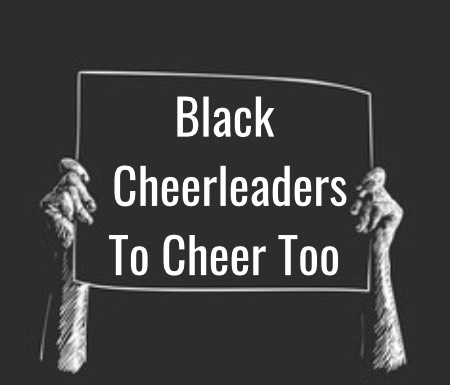
If we look across the course of the 1950’s and 1960’s, schools across America failed to integrate cheer squads and black athletes in general across sports teams. This had nothing to do with their athletic ability or talent but the colour of their skin. In 1969, 200 Black Americans staged a protest in front of a high school in Illinois to protest against discrimination within the school. “Black Cheerleaders to Cheer Too” was spelt out across a sign amongst a variety of others being shown. Though some people may have overlooked the message being portrayed by this sign amongst all the other key messages, it represented the widespread lack of integration being shown by schools. Black cheerleaders were joined by other students, athletes, non-athletes, parents and general members of the community across the 1950’s- mid-1970s in important protests which pressed for the inclusion of black cheerleaders in schools across The States. These protests involved multiple different tactics to try and make themselves heard and enforce real and important change. They appealed to local school boards and organised direct-action protests. A direct action protest is where participants ignore established social and political procedures, examples include strikes, blockades, and boycotts. In some places, such as Pennsylvania some black families took it upon themselves to go one step further and threaten legal action against schools that would not integrate cheer squads. The fact that talented young female athletes were being denied the opportunity to do the sport they loved purely because of the colour of their skin was just one example of the social injustices black people were facing during these times, and the protests were a way of people showing enough was enough.
The lack of black cheerleaders raised so many important issues surrounding racism for different reasons. Although racism was and still is something that too many people still face to this day, regardless of their age, intelligence, background or gender, it was clear that if we looked deeper, gendered racism was a clear and blatant issue at the time. It was evident that Black male athletes were valued over black female athletes. Schools were much more likely to have black male athletes on their football teams to help them secure a win and improve the schools ranking. During a walk out at a school in North Carolina, a student pointed out
“They want our boys to play on their teams and win the games for them, but they don’t want our girls to cheer for them.”
Another point these protests and issues brought to the surface where the lack of black professionals in these American schools, not just in cheerleading or other sports but in a variety of aspects. Black coaches, black administrators and black students were lacking in a variety of different areas and extra-curricular activities. An example of an extremely successful protest at a school in Georgia about the lack of black cheerleaders saw the school not only agreeing to integrate the schools cheerleading squad but the coaching staff was also integrated, and black faculty members and students were added to the student council. These protests that were happening for the cheerleaders weren’t just helping the cheerleaders themselves but were successfully opening peoples eyes to issues within other areas of the schools. This eventually helped with the opening up of different avenues within the schools for black people to pursue things previously brushed under the carpet.
Finally, these protests about Black cheerleaders got people actually questioning integration itself. Black cheerleaders soon realised they were just conforming to what was being classed as the ‘white styles’ of cheerleading at the time. The style of ‘Black cheerleading’ emphasized different rhythms and movements and it was clear that not just the teams needed to be integrated but the different styles as well. Issues like these are lightly brought to the surface through a key part of a cheerleaders life, the Bring it On movies.
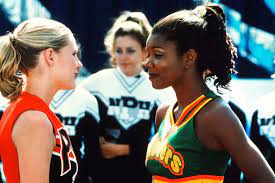
Although The Bring it On films are a string of cheesy and enjoyable teen movies, if we look deeper they do also contain some important messages which link to these issues. In the first of the Bring it On films, we learn that quite early on the Captain of the privileged group of cheerleaders (The Toros) who win all their competitions have actually been stealing cheers from the rival cheer squad in the film and are called out for what is essentially cultural appropriation. The rival team, The Clovers, are shown as very much the opposite of the Toros in most if not all aspects including privilege and race. The scene is concluded with a key piece of dialogue where the main character who has switched from the Toros to The Clovers says “Please… I swear I didn’t know.” And the Clovers captain replies “Well, now you do.” Going back to the different styles of ‘White cheerleading’ or ‘Black cheerleading’, Bring it On All or Nothing went on to briefly touch on this. We follow Britney, a privileged white cheerleader who has to move to a different school and leave behind her original team. A team who use the derogatory term ‘ghetto’ to describe her new school and team. We see Britney learning about different racial issues and styles of cheerleading throughout the film as her eyes are opened to the privileged life she has lived. Next time you watch these films just pay some extra attention and you might notice some racial issues explored in the films you previously overlooked.
I think it is really important that we look back and learn about Black History through these issues and events that took place. Protesting, whether it be through taking a knee, boycotting or using blockades has and still does prove as a successful way to make your voice heard.
If you don’t feel comfortable partaking in a protest like this, simply reading an article like this, having a conversation or doing some of your own research are all steps we can take in order to make the world a better place.
This article has looked at just some of the events that took place for black cheerleaders in America.
To read about more of the protests that took place read the full article here.

Written by Millie
97% of people who follow CFHTT website enjoy following our social media platforms
@Cheerfromheadto
Resources use
https://www.aaihs.org/black-cheerleaders-and-a-long-history-of-protest/
https://www.google.co.uk/amp/s/www.cbc.ca/amp/1.5711582
Discover more from The UK's number one Cheerleading Blog
Subscribe to get the latest posts sent to your email.
