It feels a bit weird to be writing about an re-emerging division in the midst of a pandemic when the best competition experience we can hope for is virtual competitions. There is a glimmer of hope on the horizon though and hopefully we will be back to competitions soon.
The division is called “Traditional Pom”, or “Cheer Dance” depending on the EP (event provider) and until now the division has been growing stronger in Scotland. Traditional Pom is an old division that is moving down from Scotland, they have been making moves to bring this division down South so their teams could compete in England. (UKCA offer a division with the same name, but it means something completely different.)
What is Traditional Pom?
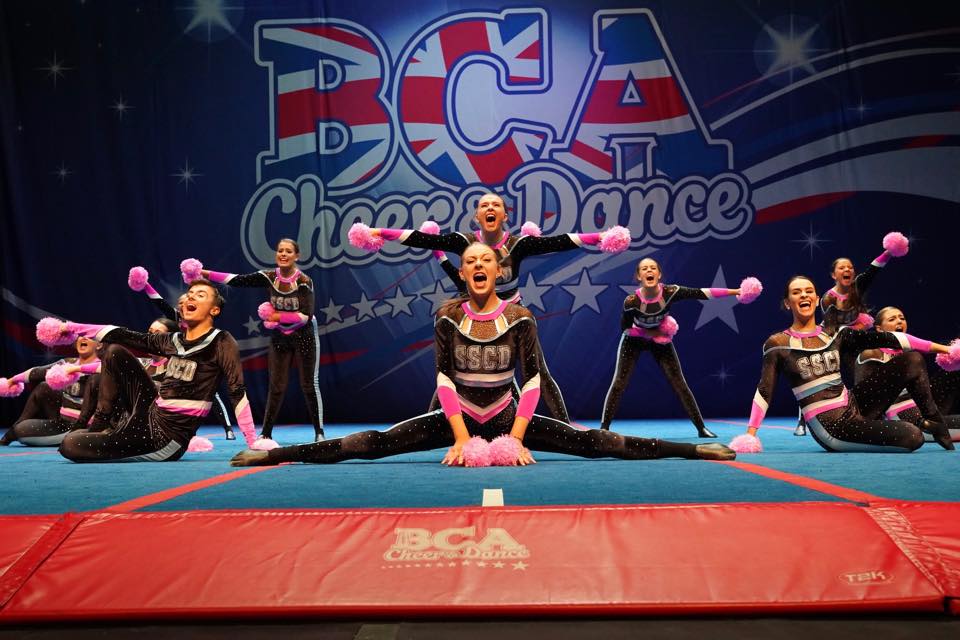
Traditional Pom is Pom, but with a focus on Pom Technique as opposed to skills execution. It is Pom in the purest sense, where the focus is on formations, performance, motion technique, complexity and strength and routine visuals. No turns or leaps. Jumps are allowed, but best used to support visuals.
I thought “Cheer Dance” was an umbrella term for Pom, Jazz, Lyrical and Hip Hop?
Technically, this is incorrect. The umbrella term should be “performance cheer” not “cheer dance” as determined by ICU, who are the Olympics-recognised international governing body. No doubt everyone will understand you if you use Cheer Dance to reference all the divisions, but “Performance Cheer” is the correct term. I often have to correct myself as this was such a learned behaviour when I went to university!
Why could it be an important division in England?
Quite simply, it could be more competitive.
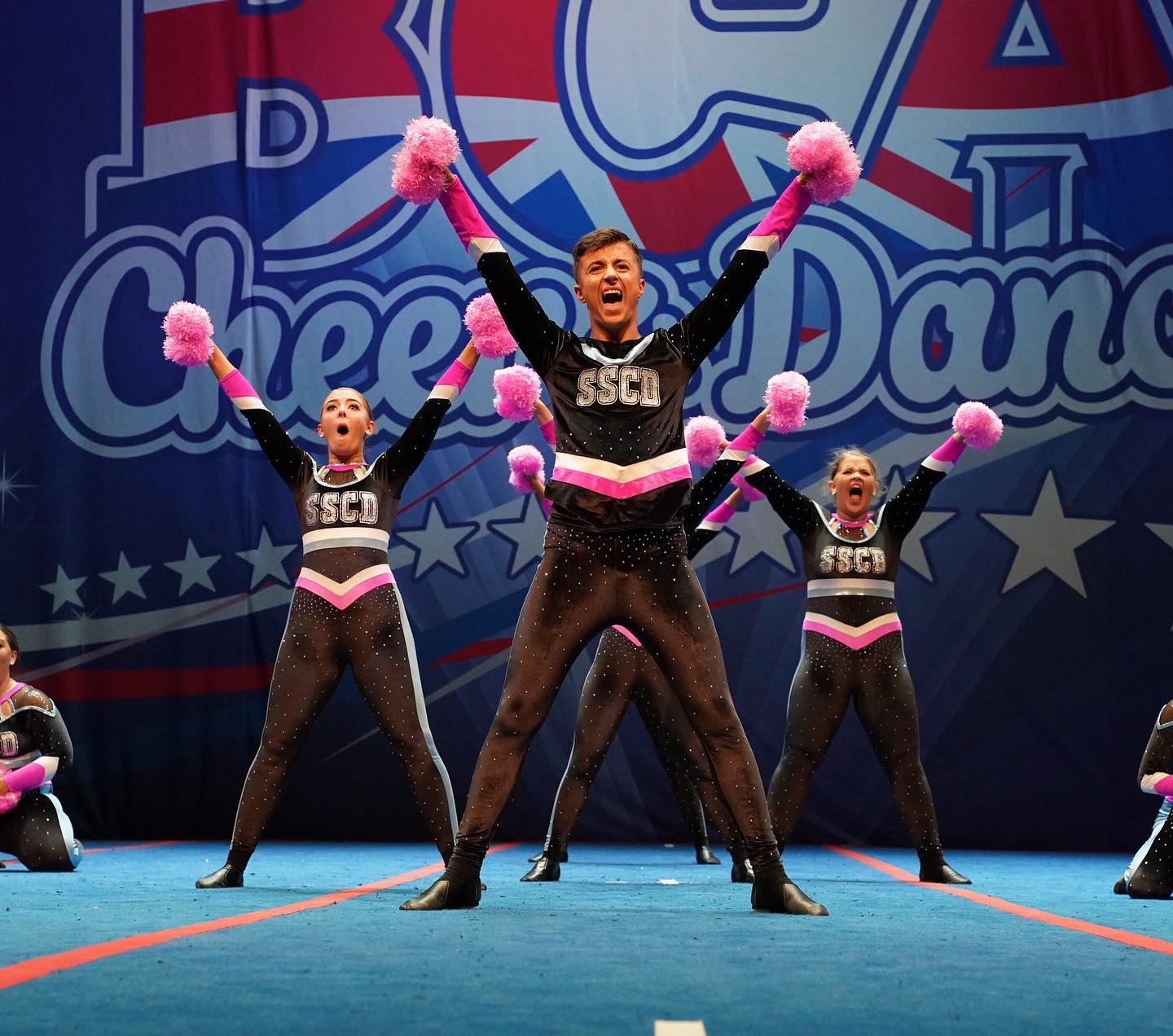
1. Traditional Pom rewards the best Pom choreography and performance, while discounting skills. I don’t think it’s radical to suggest Pom is a fast growing sport with many new teams opening every year in this country, often fielding athletes with little performance cheer experience. These teams are hugely important for the future growth and competitiveness of the sport. Yet it takes time to build up the variety of complex skills in performance cheer, especially if you’re a grassroots team, and will put new teams at a competitive disadvantage to more established teams which might take many years to overcome. Traditional Pom puts all players on a more even playing field, with less for newcomers to work on, and really tests the strength of a team’s and their coaches’ core pom knowledge.
2. For more established teams, Traditional is also a hugely important opportunity. Even if you have skills galore, you will be fast overtaken in the Freestyle Pom division by teams with both a decent skill level and Traditional Pom skills. As a coach and team, Traditional Pom ensures that you are also working and actively thinking on the elements central to Pom, such as formations, Pom motion technique and performance. Competing in Traditional Pom is every bit as much a challenge for established coaches and athletes, it is useful to get focused feedback and you will definitely see the benefits in Freestyle Pom.
I would love to see teams both in university and Allstar circuits that attend BCA to give this division a go. I would also love to see ICE and Cheer City, traditionally competitions friendlier to grassroots teams, to add this division in and advertise it.
Can you get a worlds bid with Traditional Pom?
As ISASF does not offer this as a division, you cannot currently get a worlds bid when competing in Traditional Pom. Pom bids offered by EPs are going to go to the “Pom” (Freestyle Pom style) category.
We are delighted that a couple of teams in Scotland spoke to us about their experience with Traditional Pom/Cheer Dance. Scotland is currently the strongest country in the British Isles for Pom, their teams consistently placing the highest at worlds and getting the biggest % of Pom bids and perhaps their understanding of divisions such as Cheer Dance is why. Scottish teams are generally lauded for their performance, visuals and strong and consistent Pom technique, many of them entering this division in addition to Freestyle Pom/Pom.
Leanne Wrench
is the programme owner of Silver Spirit Cheer and Dance in Helensburgh, and was also recently announced as one of the Scottish National Coaches for 2020-21 for Adaptive Abilities Pom. SSCD frequently has successful athletes audition for various divisions of the Scottish National Teams.
Karen King
is the programme owner of Blast Cheer and Dance in Glasgow. Blast was formed in 2005 and is part of Blast Dance Academy. They have won many first place trophies over the years but Cheer Dance/Traditional Pom has been where they shine with their senior team in particular being undefeated in many years. Karen’s background is in dance and have qualifications in tap, modern, Pom, jazz, hip hop and cheer. Her biggest achievement in Allstar dance has been competing at US Finals in Virginia and coming first place.
1. When did you start competing in this division?
Leanne: We began in the cheer dance section around 5 years ago (2016).
Karen: We started competing in cheer dance around 2011.
2. Why do you choose to compete in this division in addition to/instead of Freestyle Pom?
Leanne: We chose cheer dance instead of Pom as we were a beginner team and found cheer dance more suitable to the beginners we had at the time. As we grew as a team, even those who crossed over from Pom say they have MUCH more fun in the traditional section as there is no technique it is much less pressure.
Karen: When we originally started competing back in 2005 there was only one division and this was Pom. Pom at that time was nothing like it is now and although there were technical elements like pirouettes, you rarely saw fouettes and advanced turn sequences. As the years went by, Pom became much more technical and as a team we were strong in motions and jumps but had some way to go with our dance technicals. When we first saw cheer dance at Scotcheer we realised that this was the division to better show off our skills.
3. What elements did you notice vastly improved in your dancers by competing in this division?
Leanne: In general our team seem to adapt much better to fast-paced choreography and formation changes, our dancers became much sharper and much more keen to work as a ‘larger’ team.
Karen: Without the pressure of adding technical skills, we were able to spend more time focusing on other areas of the score sheet. Our Cheer Dance teams are generally sharper with more strength behind their motions than some of our Pom teams. Any of our athletes who started off in a cheer dance team before moving into a Pom team has the advantage of going in with strong jumps and motions already under their belt.From a coach point of view, it has made me stronger at creating levels and formations.
4. Best advice to be competitive in this division?
Leanne: My best advice would be to create choreography that the athletes enjoy, the more enjoyable it is for them to perform the more enjoyable it is to watch. Keep it clean but visual and to learn as you go.
Karen: It’s important to have fun with choreography. If the music and choreography is fun then the athletes can really get into it. Just because there isn’t technical skills doesn’t mean it can’t be entertaining. Show off your best skills!
5. With more EPs introducing it, what else do you think is needed to help grow this division?
Leanne: More teams entering the division is all we can hope for. We’re delighted BCA are catering for the division to English competitions too!
Karen: There just needs to be more awareness of the division and what it looks like since this division has only really existed in Scotland until now. Cheer dance can be extremely entertaining and impressive to watch and a great division to dance in. I would be happy to chat to any coaches who were looking for more information or clarification on how to create a team for this division.
What do you think about traditional pom? Do you have any questions about it? Message us at @cheerfromheadtotoeuk

Written by CFHTT Dance writer Emma
97% of people who follow CFHTT website enjoy following our social media platforms
@Cheerfromheadto
Discover more from The UK's number one Cheerleading Blog
Subscribe to get the latest posts sent to your email.
