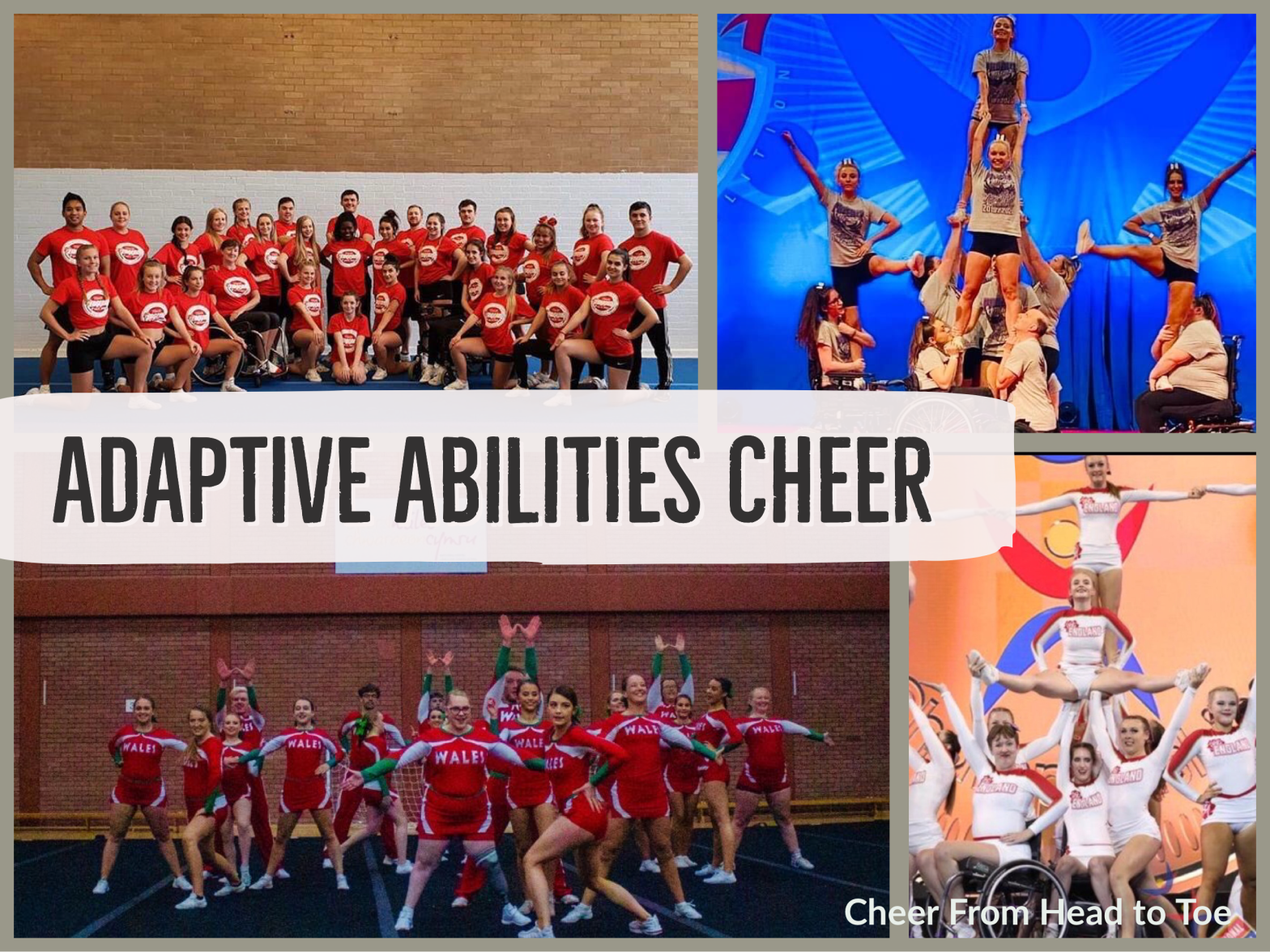
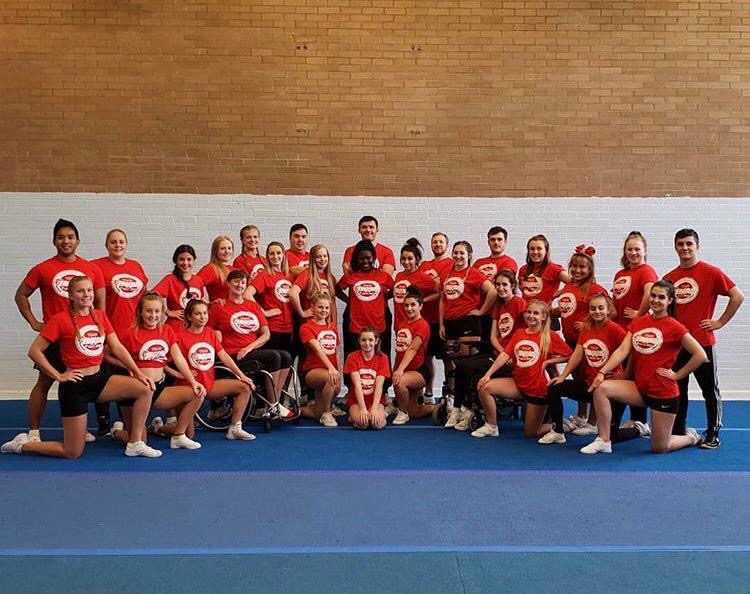
When you think of the elite world of competitive cheerleading it’s hard to conjure up an image of someone wheelchair-users fitting into the mix, but with the emergence of Adaptive Abilities Cheer in recent years, this has finally become possible for athletes with additional needs.
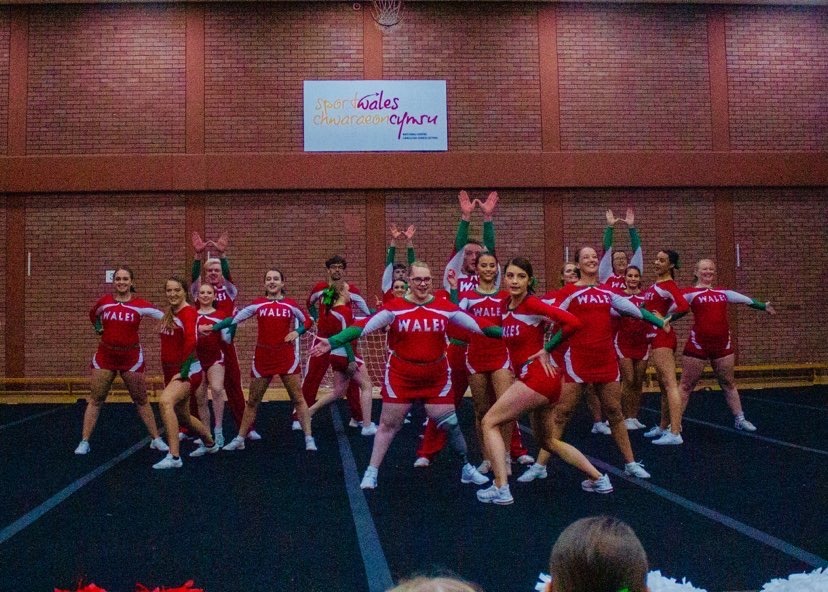
Adaptive Abilities Cheer (formerly known as ParaCheer) is beginning to appear not only in all-star programmes (Phoenix Allstars, GCA, Momentum Cheer to name a few) but since 2017 in ICU Worlds as well. As of Worlds’ 2019 there were 4 Adaptive Abilities categories: Unified Advanced Cheer (Level 4), Unified Median Cheer (Level 3), Unified Hip Hop and Unified Freestyle Pom. Team England fielded teams in Advanced Cheer, Hip Hop, and Pom; taking home gold in all three. Team Wales also competed in Advanced Cheer, taking home the silver, with Team USA coming in third.
All of the current ICU categories use a unified approach to Adaptive Abilities. This means a mixture of disabled and non-disabled athletes. The current stipulation for ICU is that 25% of the team have some form of disability, although some UK competitions only require one athlete to have a disability to enter Adaptive Abilities categories. While the scoring grid for Adaptive Abilities is mostly the same as All-star, there are some clear changes made to ensure the safety of the athletes involved. Although Adaptive Abilities Advanced is classed as Level 4, baskets are not allowed in any routine and there are specific rules surrounding wheelchair users and anyone using ambulatory equipment.
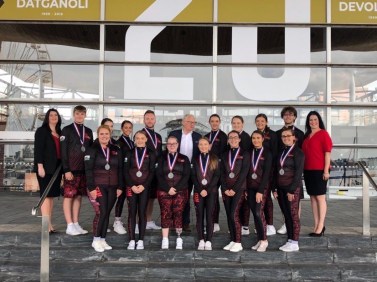 I had the great pleasure of interviewing a number of participants in Adaptive Abilities, both as athletes and coaches; starting with Sabrina Mountjoy, A Silver and Gold World Champion Coach as Head Coach of Team Wales Adaptive Abilities Cheer, Head coach of Wales Adaptive Abilities Coalition and the Adaptive Abilities representative on the SportCheer Wales board, alongside coaching All-Star Cheer and Dance at RSD. Sabrina coached the first Team Wales team ever to enter into ICU worlds as an Adaptive Abilities division and her Para-Pom team (as they were named at the time) took home Gold in 2017. She has since been Head Coach of every Paracheer and Adaptive Abilities team that Wales have fielded. As Team Wales are not competing in ICU Adaptive Abilities this season she is also Head Coach of the newly formed Welsh Adaptive Abilities Coalition (WAAC).
 I started by asking Sabrina’s reasoning for getting involved in Adaptive Abilities. She simply ‘felt that we should have been doing it for years and was happy to make sure it happened’.
When asked about the current split of disabled and non-disabled athletes, Sabrina advised that WAAC currently has a 50/50 split (7 able bodied and 7 with disability). These athletes have a range of different disabilities including sight impairments, ASD, ME, Osteogenesis Imperfecta as well as an athlete with a prosthetic leg. Having such a wide range of additional needs can create a challenge for a coach but Sabrina argues that ‘ the best part of this is the incredible forward thinking that goes into it to make sure the opportunities are there for ALL athletes’. At times this involves hours of pre-planning, ensuring that the routine choreography showcases all abilities on the team, but also keeps everyone safe. When speaking to an athlete on WAAC she personally follows a mantra of ‘Is it safe? Is it Legal? If the answer is yes then go with it!’
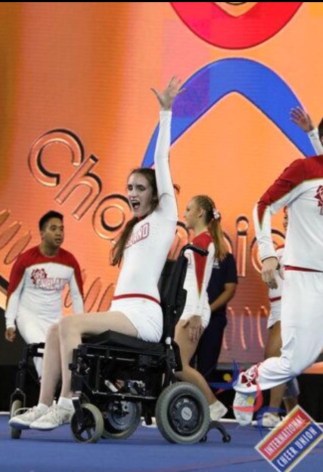 I also spoke to Beth Hope, a member of Team England’s Adaptive Abilities Advanced ICU team who took home the Gold in 2019. Beth has been diagnosed with ME and uses a power-assisted wheelchair while training and competing. Beth joined Cheerleading prior to her diagnosis, but as her condition began to affect her in her late teens she became unable to continue to compete in All-Star Cheer. She continued to coach and at a UK competition saw Team England Paracheer for the first time and finally saw a future for herself in the sport. She tried out for Team England for the 2018 Worlds’ but didn’t quite make it on. She continued to work on her skills and went back for another chance and made it on to the 2019 Worlds’ team for
Adaptive Abilities Advanced.
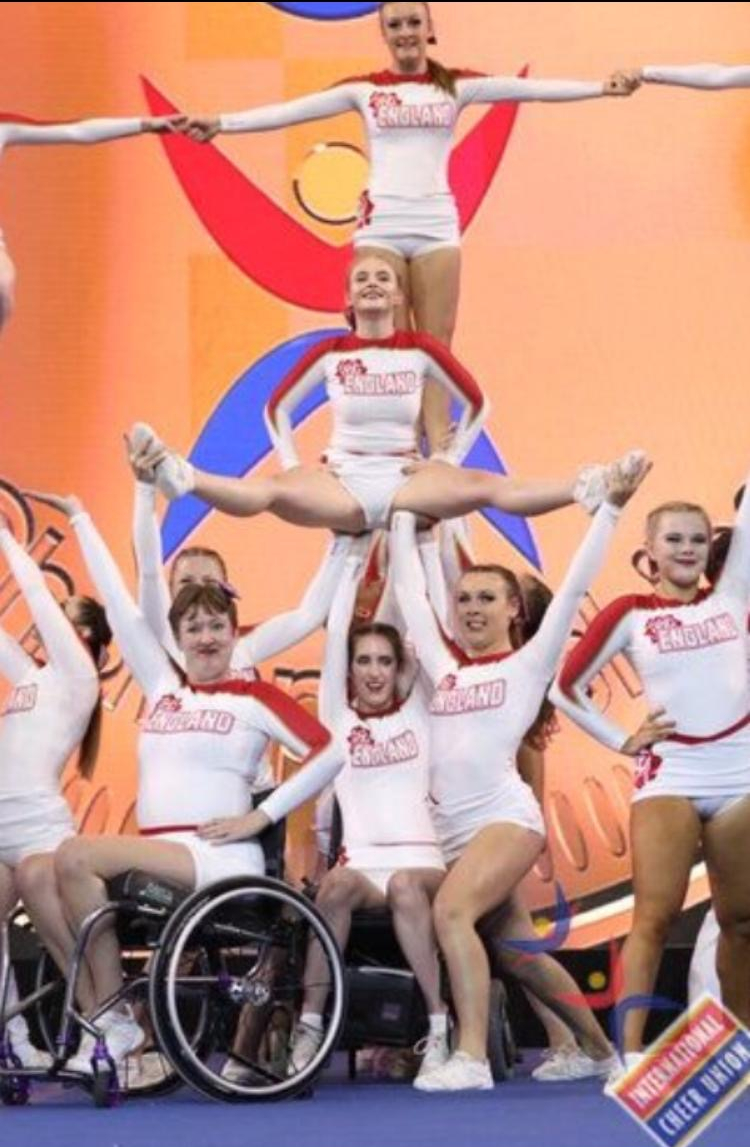
When asked about the challenges she faces as an athlete with additional needs, her main concern is being able to manage her health condition to allow her to train as well as she can. She has found that breaking down the routine and potentially not having an active part in every section allows her the chance to take a break and recover in order to make it through to the end. As a seated athlete she has also had the opportunity to be involved in a number of adapted stunts to account for her chair. For Worlds’ 2019 her chair was also adapted in order to keep her flyers safe, taking off panels and attaching her controls to the back of the chair to remove any risk of other athletes coming into contact with it.
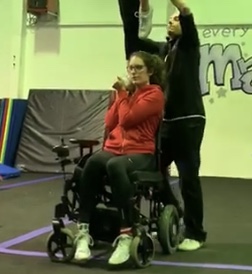
Speaking personally as a Coach of a Level 1 Adaptive Abilities team that Beth currently trains on, I have found great joy in coming up with creative ways to involve all athletes in adapted stunts. For example, I worked with my athletes to create a quarter up to lib stunt utilising Beth as a main base. As she was unable to change position, or utilise her legs for strength in lifting her flye , the flyer had to step into an adapted ‘gut stand’ then up to an adapted prep on the bases shoulder.
While Adaptive Abilities is still relatively unknown in the World of Competitive Cheer, more grassroots teams are beginning to emerge, allowing more and more athletes with disabilities the opportunity to get involved. For anyone interested in getting involved, Paracheer International is a great resource to make a start (paracheer.org), and worth keeping an eye on their Facebook page for teams to join! With ICU Worlds providing opportunities for these teams to compete at an international level, it’s exciting to consider just how far this area of the sport can grow. A number of the Event Providers are already looking into a unified score grid to allow more competition availability for these teams. The more programmes getting involved in the UK, the more opportunity for these teams to compete and get a real feel of competitive Cheer!
The article was written by Molly 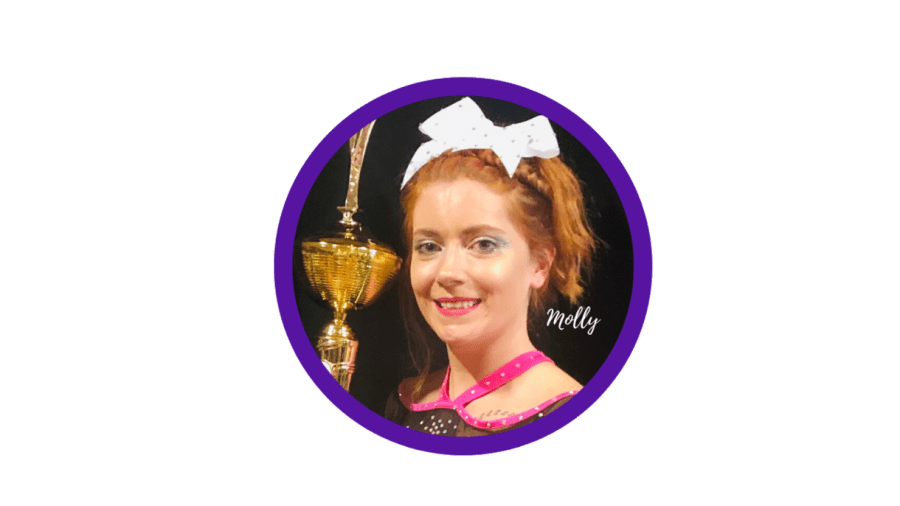
97% of people who follow CFHTT website enjoy following our social media platforms
@Cheerfromheadto
Discover more from The UK's number one Cheerleading Blog
Subscribe to get the latest posts sent to your email.

One thought on “Why having a wheelchair won’t stop you cheerleading anymore.”